For this task I have been asked to document all of my practical outcomes, including all my practice and experimentation work during my research, leading to my final assessment outcome.
Practice work:
Here are some looks I created during my research, when trying to decide which period I wanted to work on.
Victorian Street worker

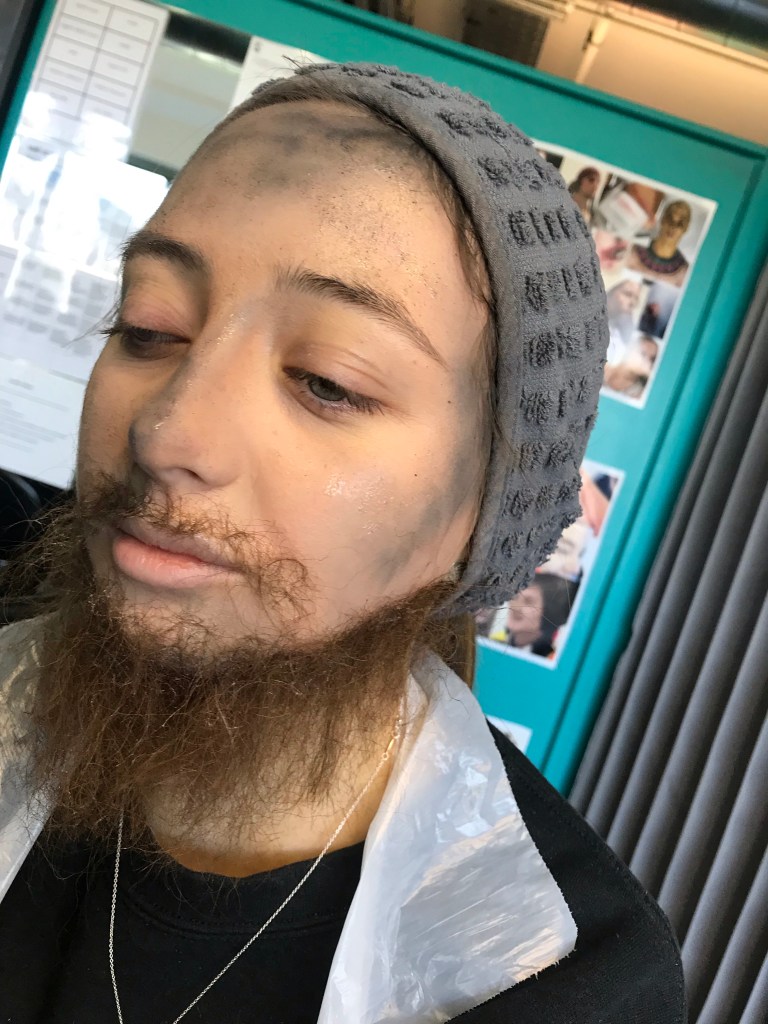
This look was created based on a Victorian street worker, largely inspired by Fagin from Oliver Twist.
For this look I used the dirty down technique (applying dark charcoal powders to the face) to create a dirty base. I also applied glycerin over the top of this, to create the illusion of sweat.
I also applied postiche hair to create a beard and moustache. Considering this was my first attempt using this product I am extremely impressed with the results. However, next time I use this technique I must ensure I only stick down the very end of each section of hair, to give it a more realistic finish.
1920’s Hair – Finger waves
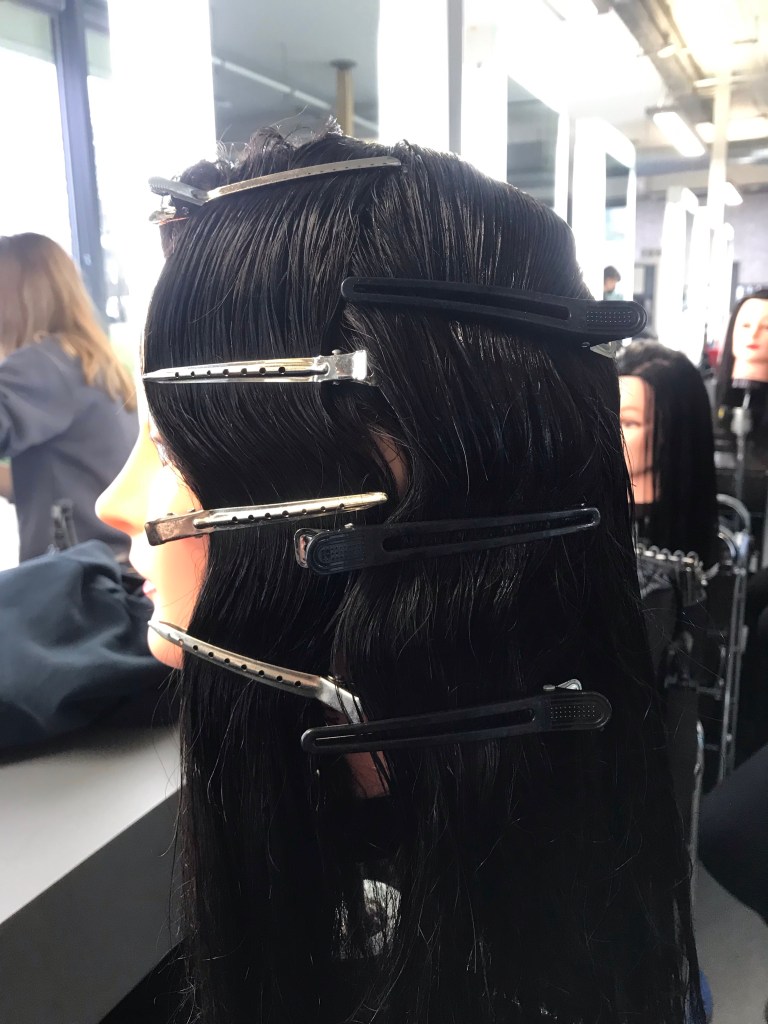

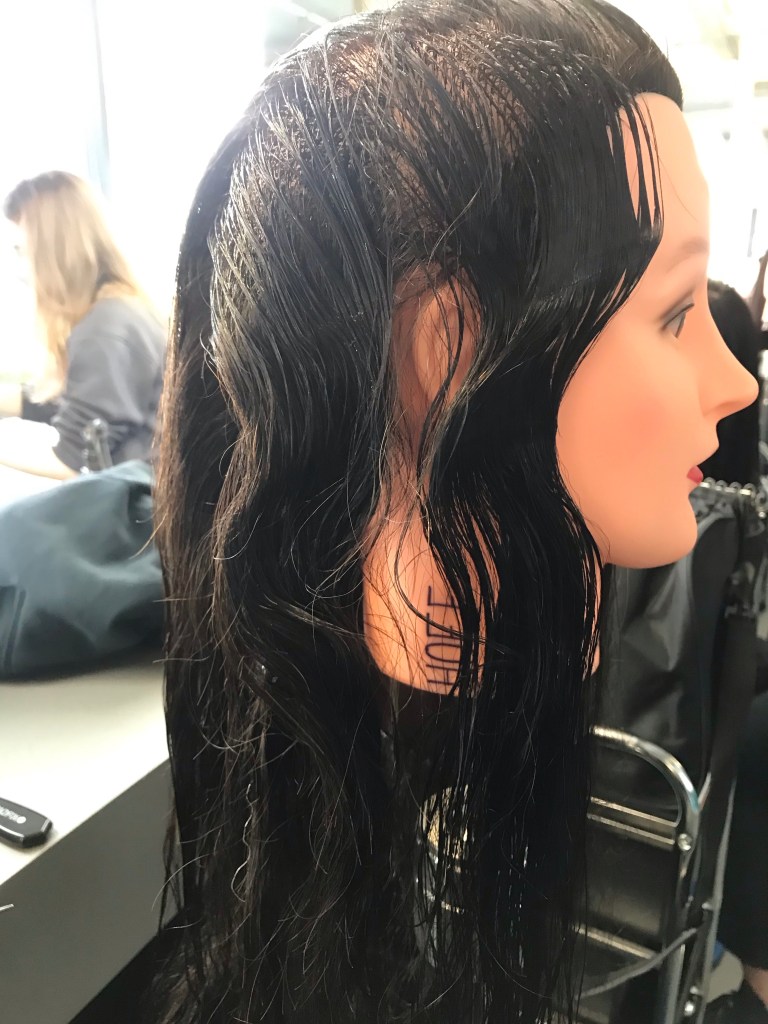
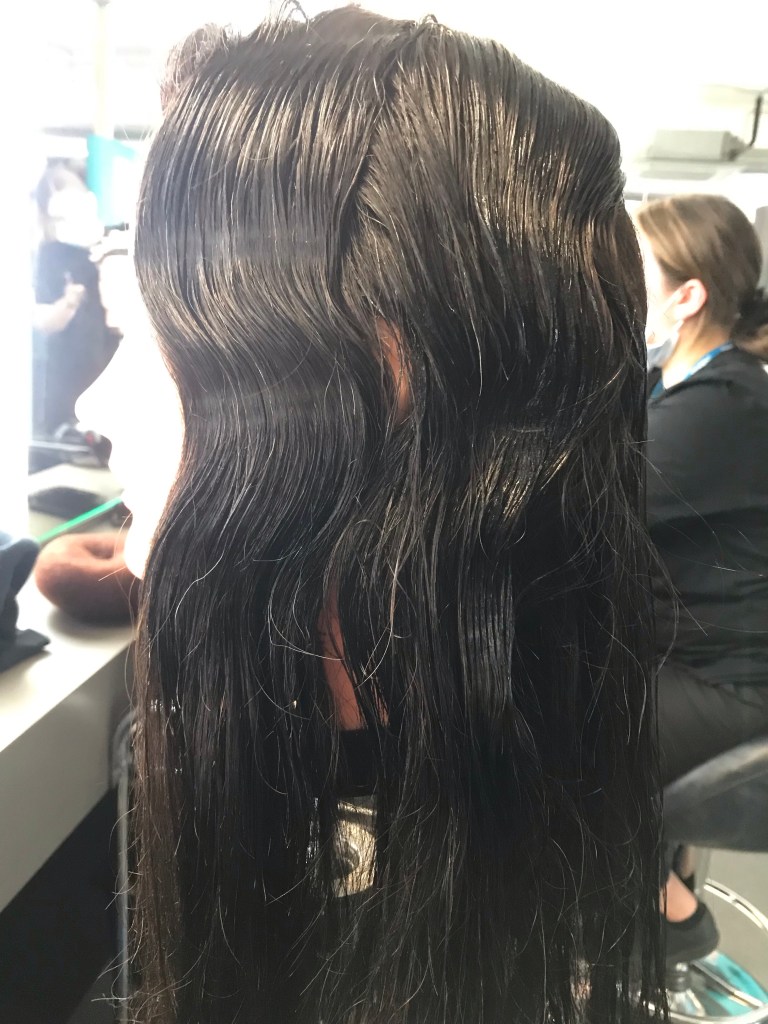
Here are some photos from my first attempt at creating finger waves.
This was one of my lest favorite hairstyles I have created, but I know I will get the hang of it after plenty of practice.
I think I did well considering this was my first attempt, and the hair I practised on was extra long. However, the overall finish would look much better if the waves were bigger.
1700’s – Pirate makeup

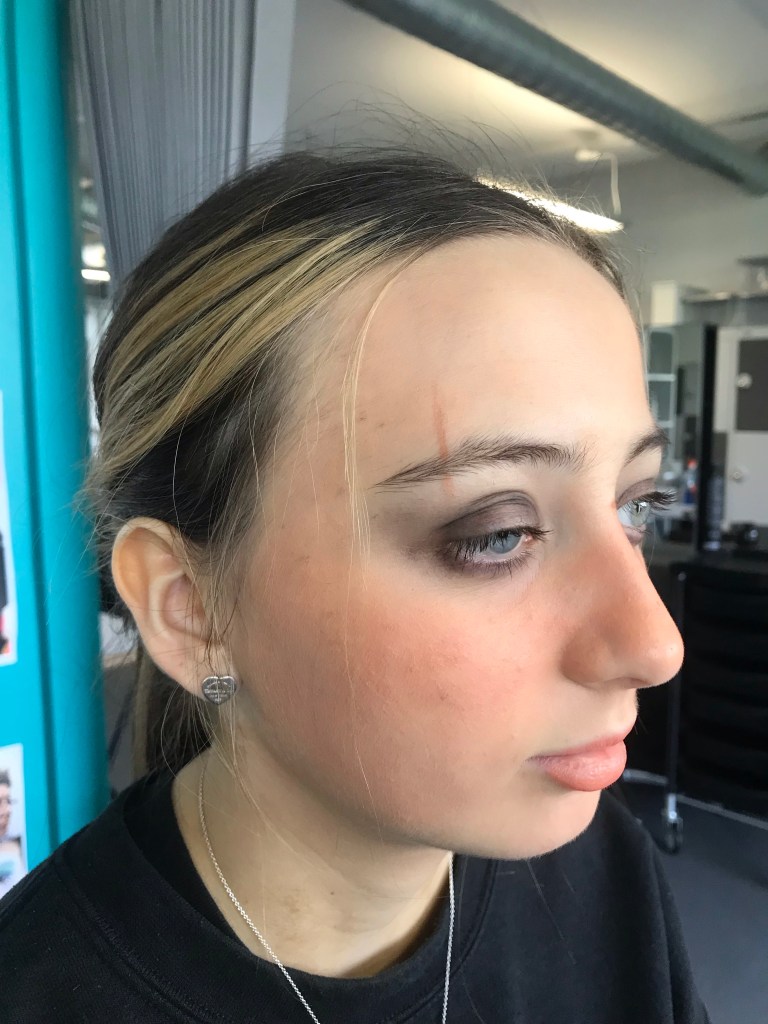
I love how many different techniques came together, to create a great finish for this look.
I chose to use a darker colour foundation to create older scars. I wasn’t sure how this would look, but I was extremely impressed with the finished result.
I also applied a bronzy blush across the cheeks and nose to create the illusion of sunburn.
Furthermore, I used a brown eyebrow pencil to create freckles and sunspots.
Finally, I created a messy eye look using dark eye shadows, and finished the look with a pale, natural toned lip gloss.
1500’s – Early medieval makeup

I created this look based on makeup from early medieval Britain.
One of the key features of makeup in this time was thin, arched brows. Therefore, I had to block out the brows, allowing me to draw over the top to create the desired shape. This was my fist attempt at blocking out brows and I am extremely happy with the result.
I used a coral pink creme blush on the cheeks, and ensured to apply a similar colour on the lips.
I also used a grey eye shadow on the outer corner of the eye socket to add extra definition.
1500’s – Late Medieval makeup
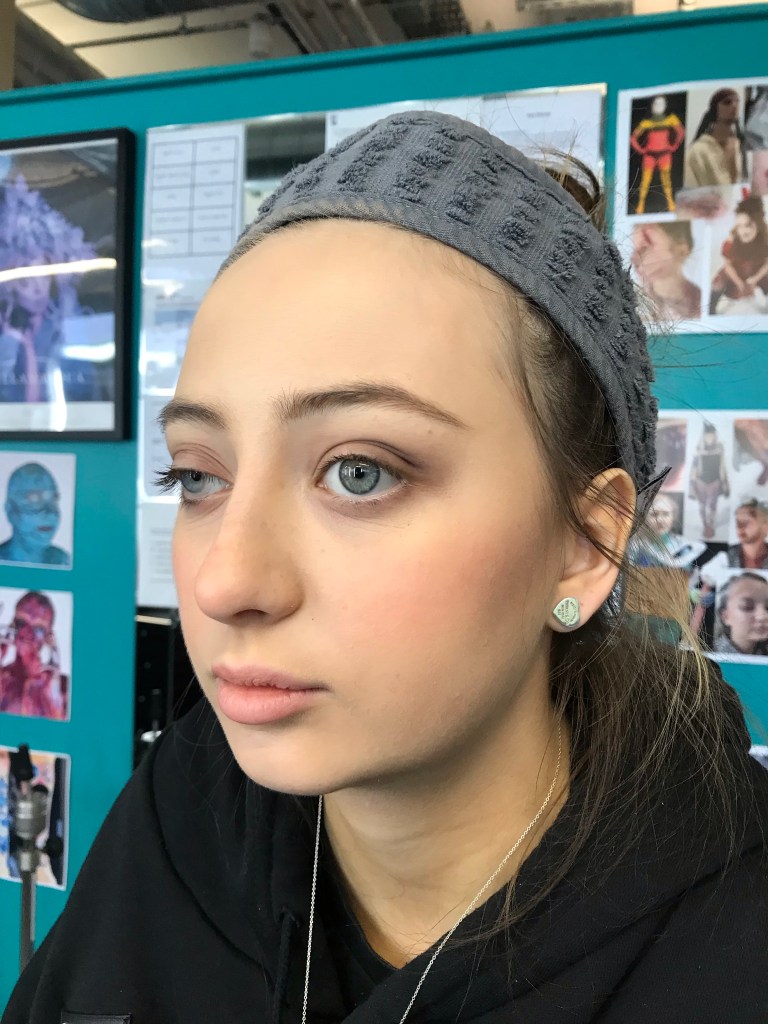
Here I have created a look from late medieval Britain.
The eyes and lips stay fairly similar all throughout the medieval period, however the face and brow trends start to change towards the end of the era.
As seen in the photo above, it becomes fashionable to wear natural brows, filled for extra definition.
Also, a darker coloured blush would be used, to add more warmth to the face.
1500’s – Waves and braids

Here is a hairstyle I created, based on the trends from the medieval era.
It was very common to see women with curly, or wavy hair. They would then braid the front parts of their hair and tie them back, to keep the hair away from their faces.
Ancient Greek makeup

This look was created, to represent makeup trends from Ancient Greece.
One of the most prominent parts of a makeup routine in Ancient Greece was eyebrows. Unlike today, in Ancient Greek times, it was very fashionable to have ‘over grown’ and messy brows. People in this time believed the smaller the gap between the bows, the better. Therefore, I used a brown eyebrow pencil to darken the brows, and bring them closer together.
An olive skin tone was desirable, so I used an olive tone foundation for the base. Then I added a small amount of brown to add extra definition to the face, and a dark brown eye shadow on the lid to define the eyes.
1912 – Edwardian makeup
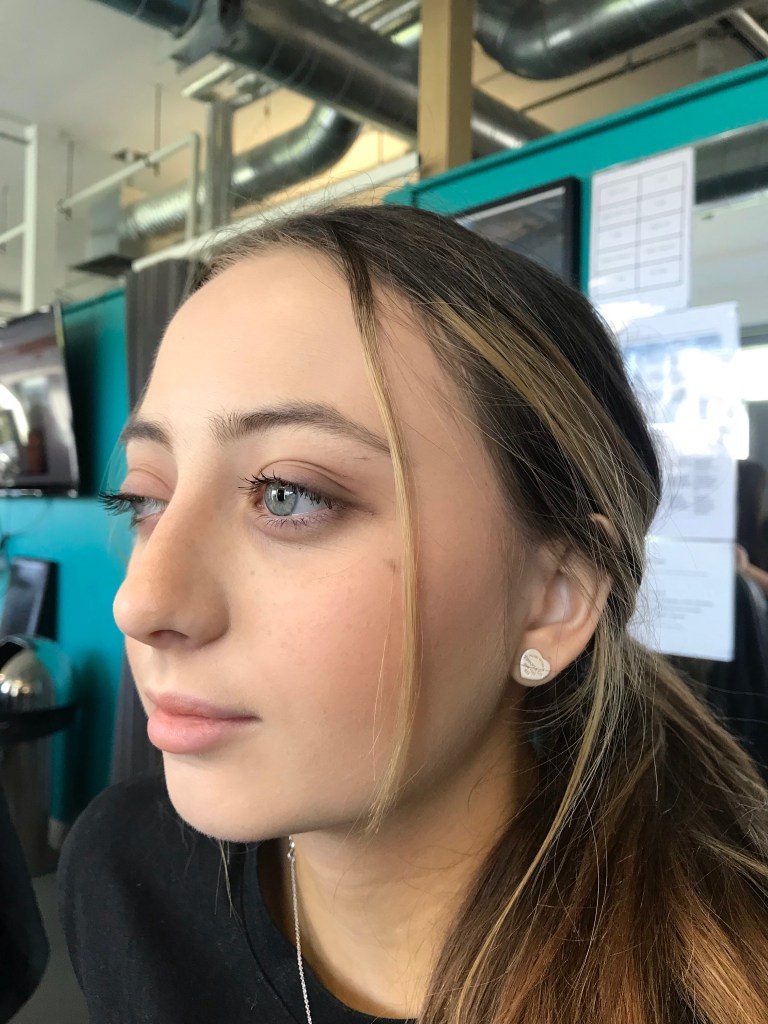
I created this look, based on the character Rose, from the Titanic movie.
In this Era, natural makeup was very fashionable. Therefore, I used minimal makeup to help enhance the facial features, without loosing the natural beauty.
Elizabethan Makeup

In the Elizabethan era, a snow white complexion was desired. Therefore, I mixed a water based face paint in to a creamy consistency, and applied it all over my face, neck and chest.
Thin arched brows were desired in this time, so I had to block out my brows in order to achieve this. Once the look was completed you could still see my natural brows which I was disappointed about. However, I think this was due to the fact that I used a water based face paint. I believe if I used a really pale cream foundation this problem would be fixed.
I also applied the blush too far along the cheek bones, as in this time the blush would only be applied on to the apples of the cheeks, so I must remember this if I create this look again.
However, I lover how the lips and eyes turned out.
Wig application lesson

Here is a step-by-step poster I created after a lesson on wig application.
I really enjoyed learning this process and am really happy with the result.
1960’s – Beehive


These are photos from my first attempt at creating a beehive without padding.
I am so happy with the result, and cant wait to try this again, making the hive even taller.
1930’s – French Pleat


After creating the beehive, we were then taught how to create a french pleat.
As this is my first try I am really happy with the result, but would love to create this again without as many fly-away’s.
Assessments : 1950’s Makeup
Here are the photos from my final assessments.
The evaluations for these looks are on a different post, as are in much more detail.
Assessment 1
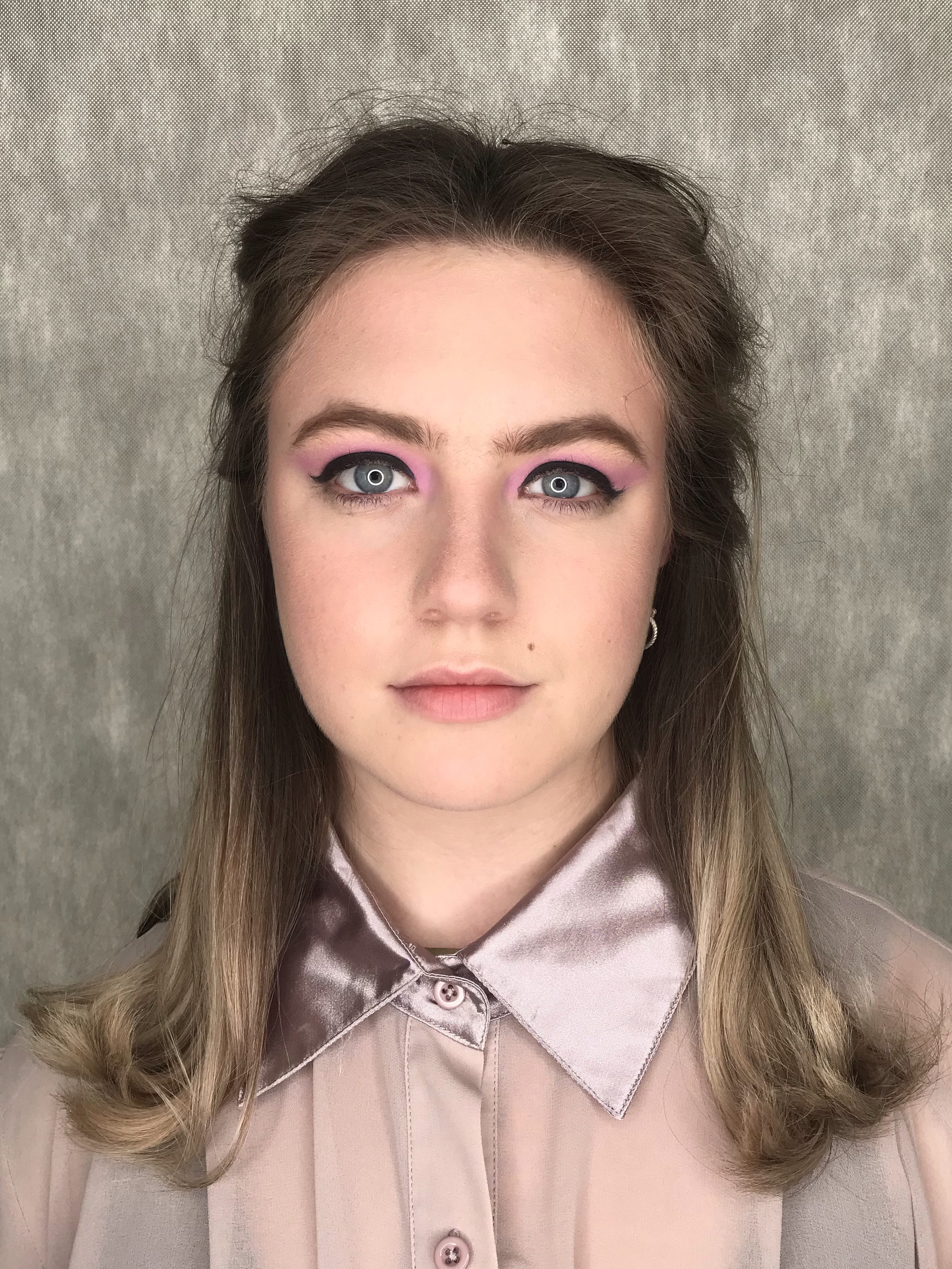
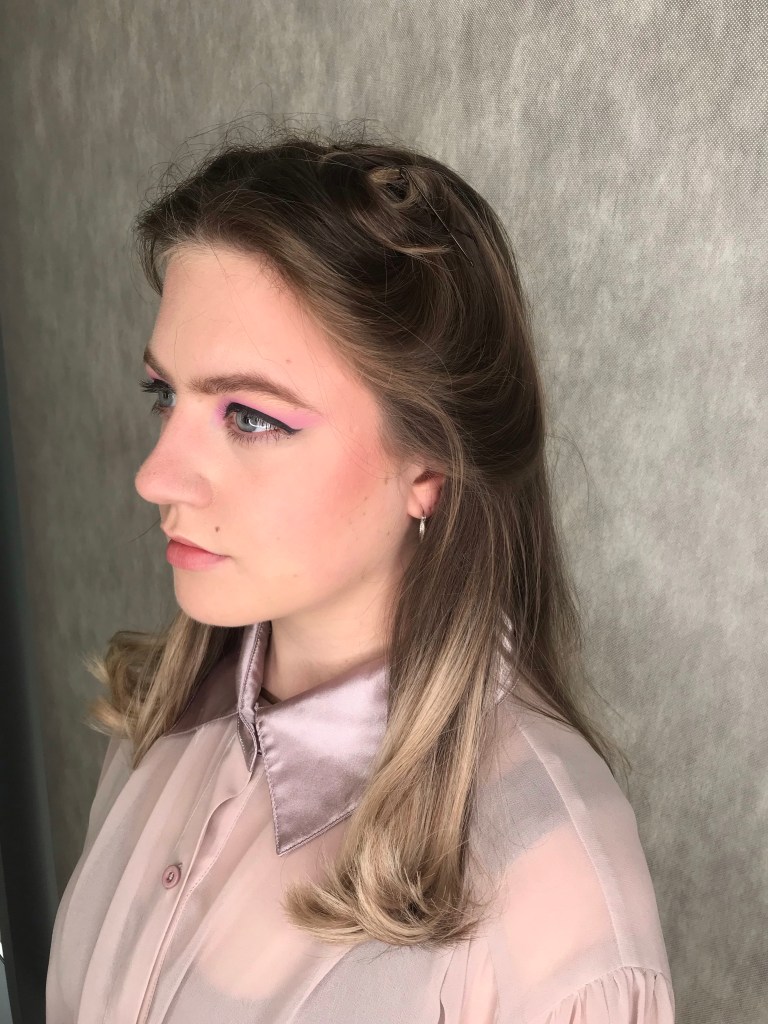
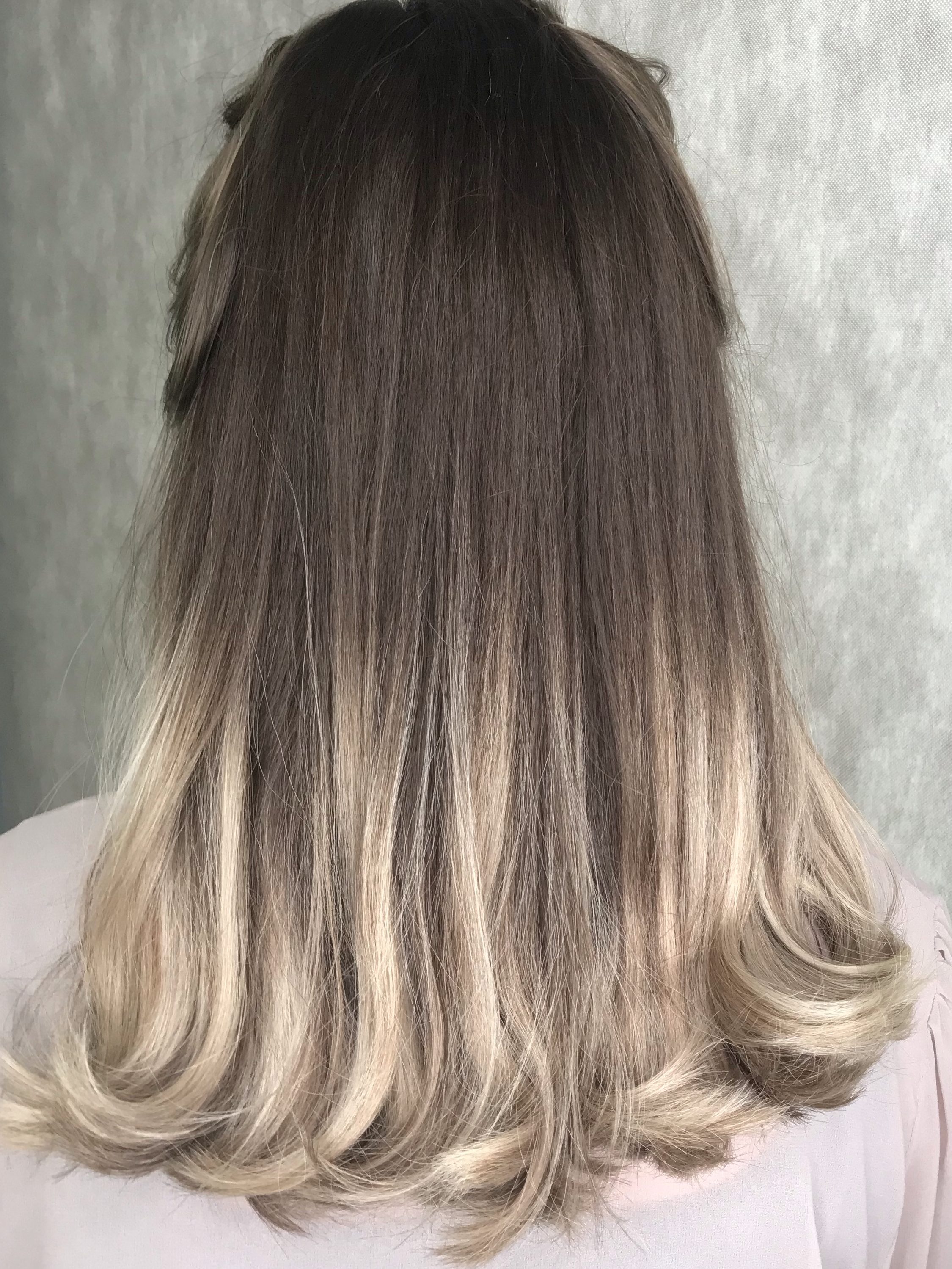
Here are the photos from my Period makeup assessment, based on the day makeup of a 1950’s woman.


Assessment 2
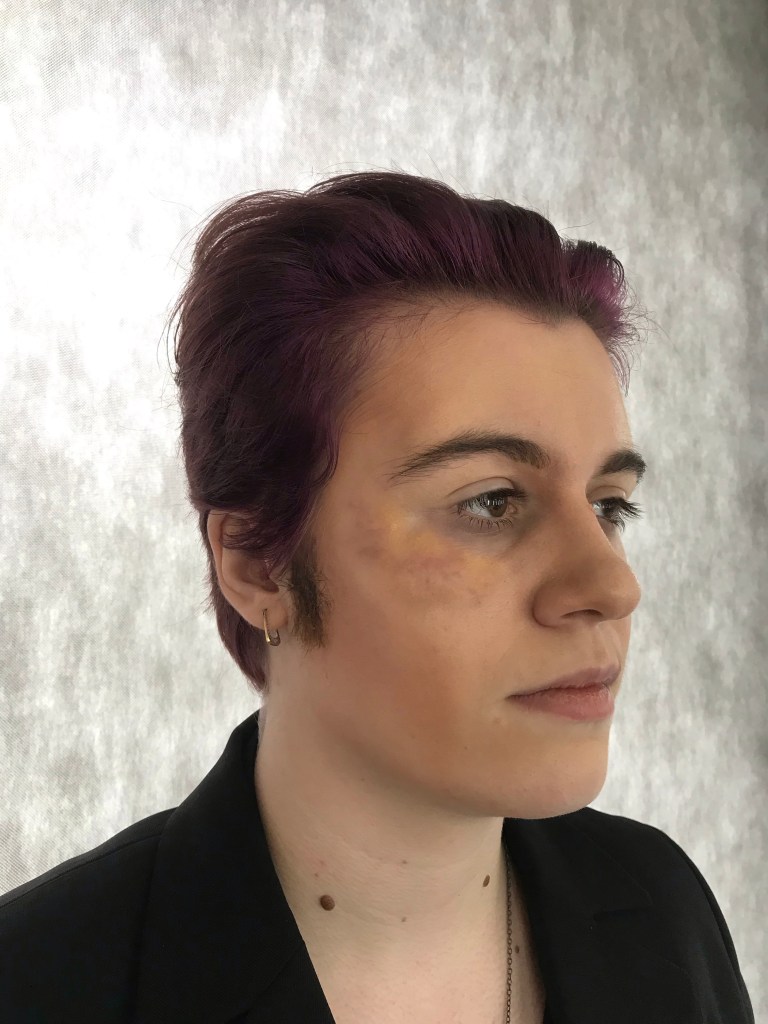
Here are the photos from my Period makeup assessment, based on a 1950’s East End Gangster.



 Megan Hoff