
For this task, I was asked to produce a presentation outlining my research in to progression options from Task one – Part A, as well as explaining UCAS, student funding and the importance of a professional CV and portfolio.
In this post I have attached images of each page in my presentation, as well as a description of what I spoke about with each slide. I have also attached a link to the presentation below, if you would like to watch it properly.

Above is an image of the opening page of my presentation, where I explained what the process would entail.
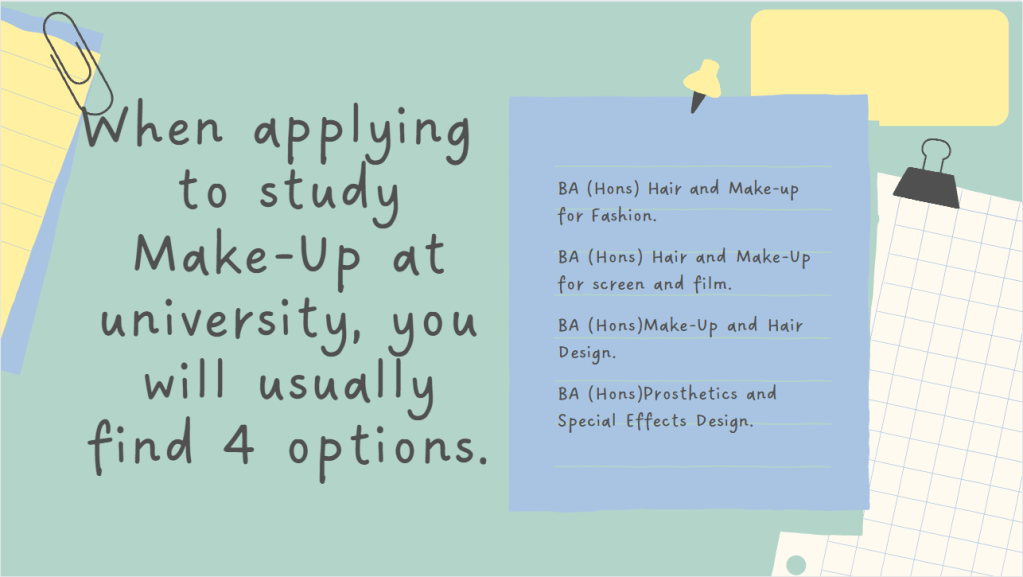
Next, I added a slide introducing the University courses I was going to give detail on, helping the viewer prepare for what is to come.
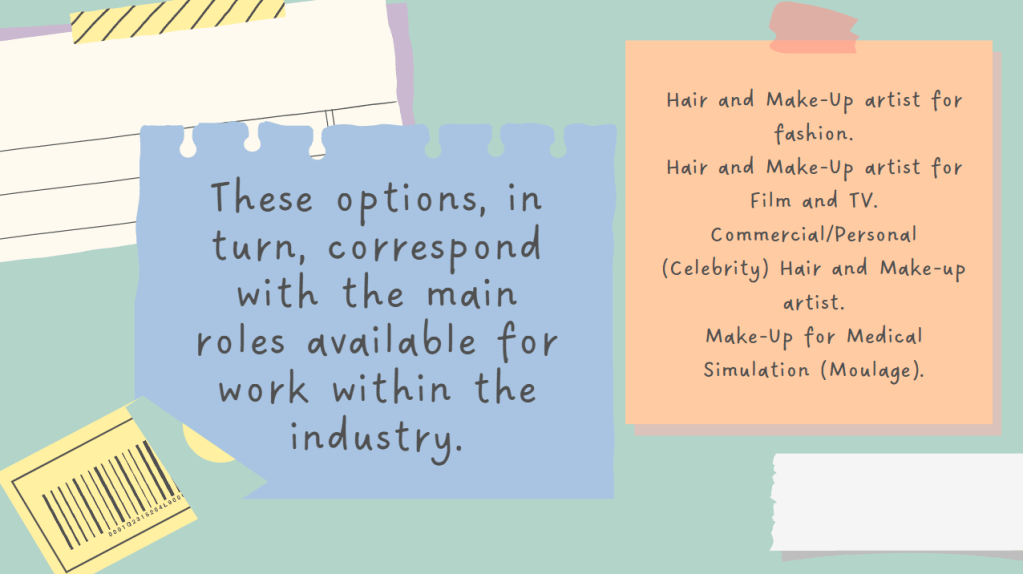
In addition, I mentioned the progression options for jobs in the industry that these courses are most likely to lead too. Once again, making the audience aware of, and exited for what they are about to learn.
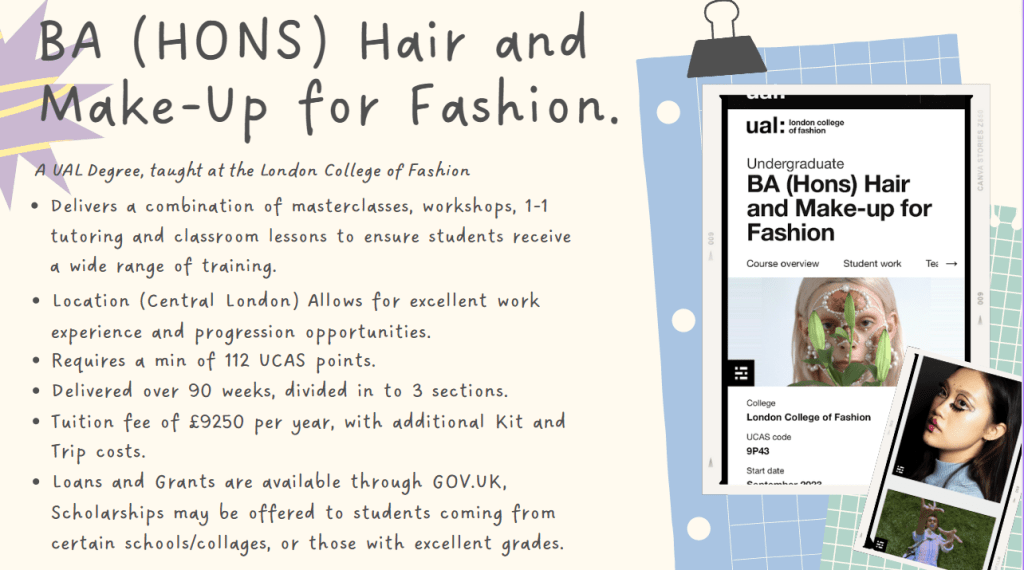
The first course I presented was the BA (HONS) Hair and Make-Up for Fashion, deviled by UAL at the London School of Fashion. In this slide I provided all the key information about this course, what it covers, it’s entry requirements, location etc. I also included a screen snip of the Universities web page advertising the course, and some student work.
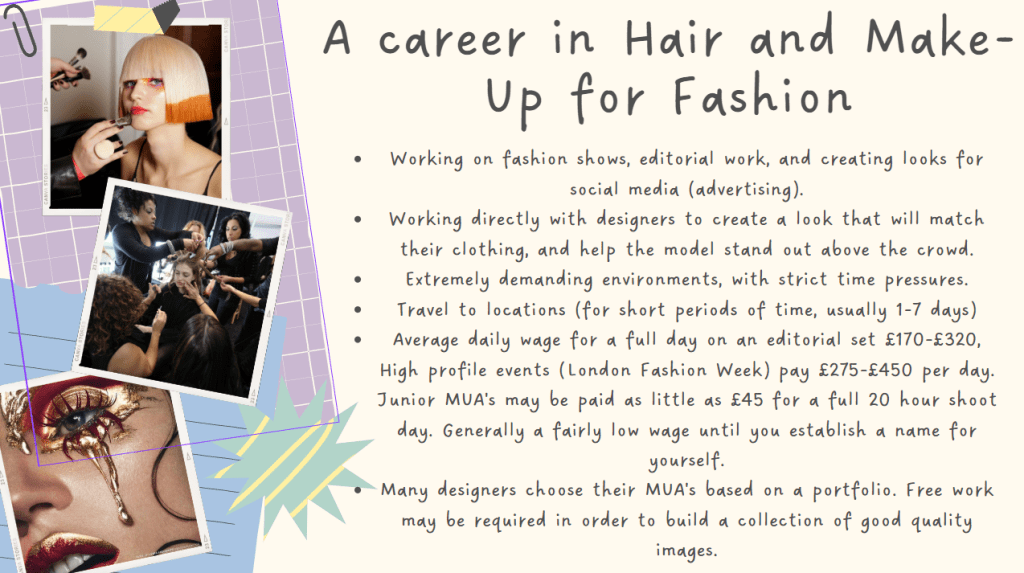
Following on from this, I spoke about a career in Hair and Make-Up for Fashion, the most common role for progression after this course. Here I detailed the roles and responsibilities of this role, as well as including information on salary. This helped my audience get an insight in to what life as an MUA in the fashion industry would entail. I also included some images of related work.

Next, I introduced the BA (HONS) Hair and Make-Up for Screen and Film, delivered by the BIMM Institute’s Film and Screen School, at their Brighton Campus. In this slide I detailed course information, entry requirements, fees and any additional key information that may be useful for potential applicants. I also included an image of the website advertising the course, and some student work.
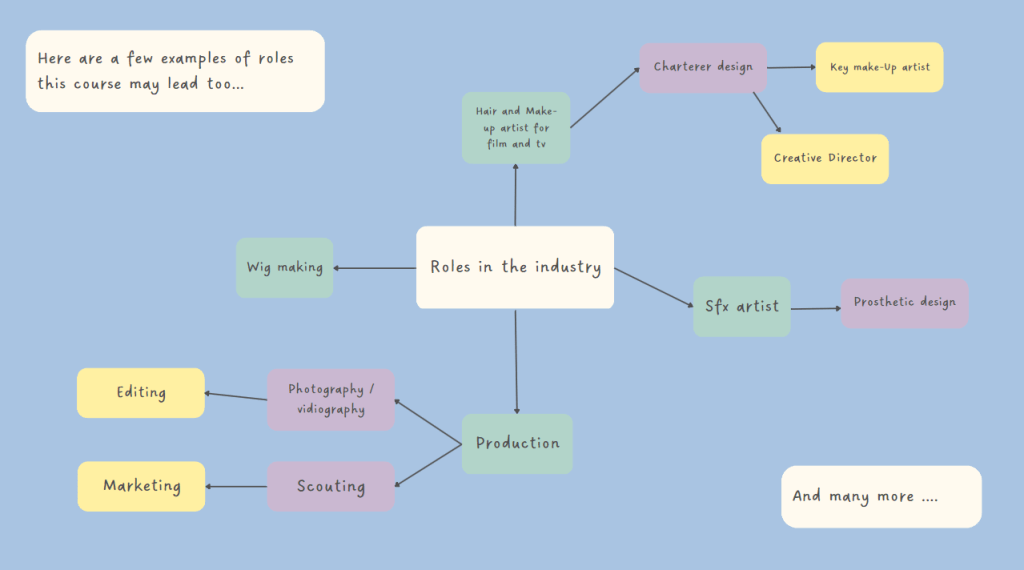
Here, I created a slide showcasing some of the potential roles that this course may progress too. It was important to me that I showed there are many opportunities that come from these courses, not just the ones I have chosen to focus on.
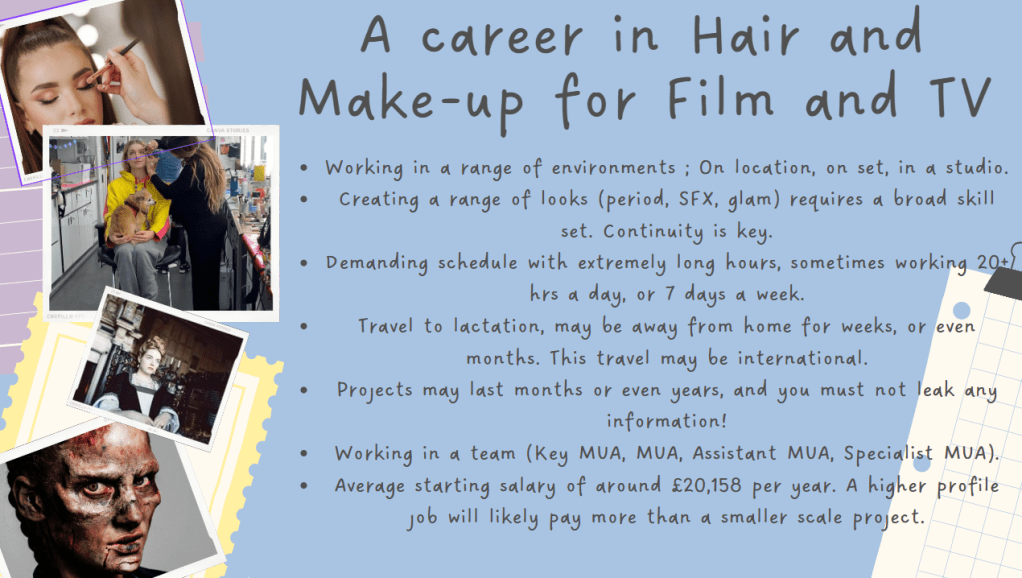
Then, I created a slide detailing the roles and responsibilities of a Hair and Make-Up artist in the Film and TV industry. In this slide I explained the different locations, projects, important responsibilities and salaries that may be achieved by one in this role. This helps give an insight in to what it is like to work in Film and TV , for those that may be trying to decide. I also attached some images to help showcase what work may need to be created, and what working environments may look like.
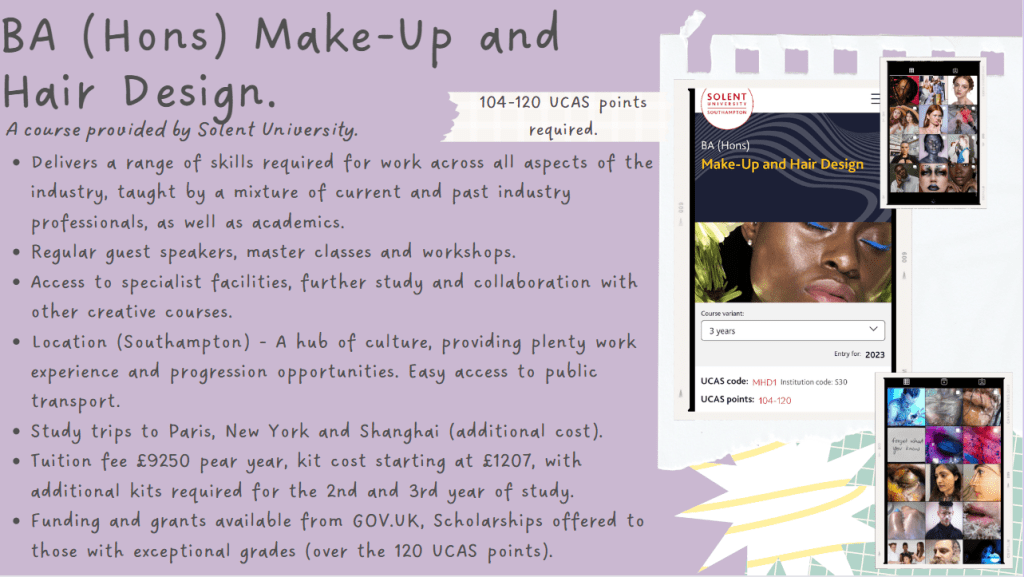
Another course I presented was the BA (HONS) Make-Up and Hair Design course, provided by Solent University. I this slide I once again delivered all the key information for this course, to help inform potential applicants of any entry requirements, fees, programs of study etc. Then, I included images of the web page advertising the course, as well as a selection of student work form the Solent Make-Up Instagram page.
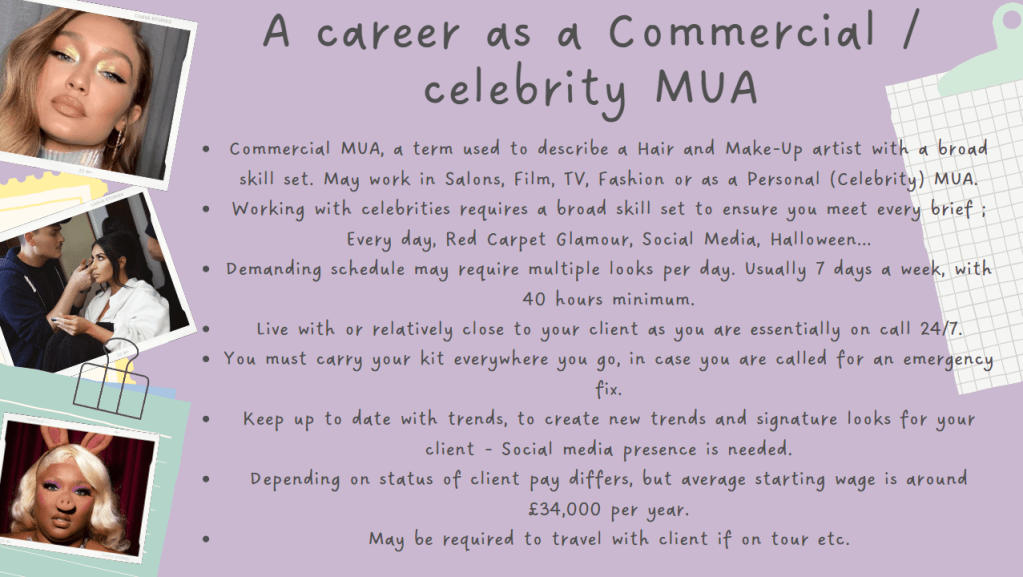
Next, I presented one role that students may chose to progress too after this course, a Celebrity MUA. In this slide, I provided all key information about this role, detailing; responsibilities, duties, salaries, locations etc. I also included images to support my points.
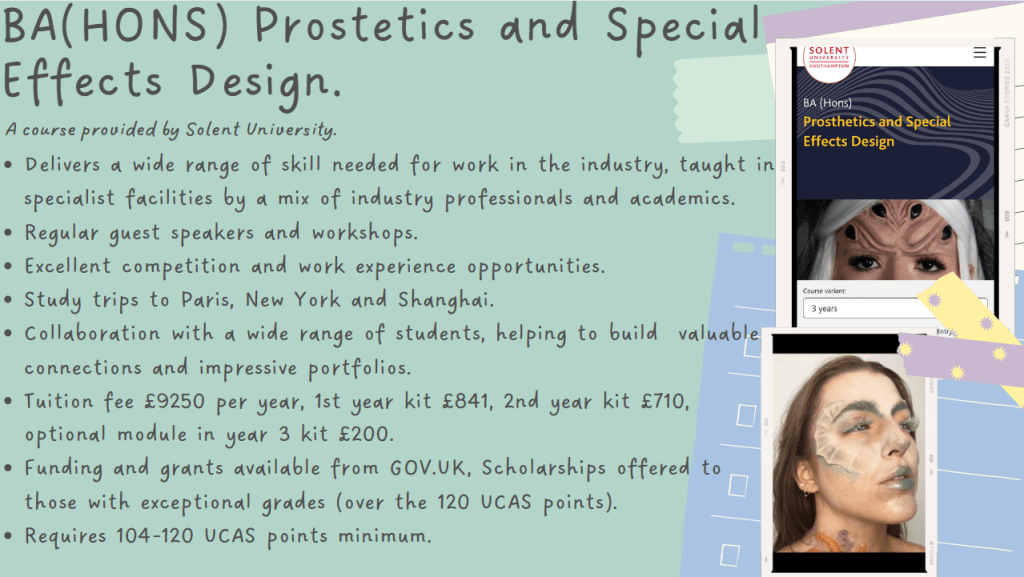
Finally, I presented the BA (HONS) Prostetics and Special Effects Design course, also offered by Solent University. This slide included mainly the same information as the last – as the two courses are provided by the same University, at the same locations. However, I did include some different course specifics such as kit costs.
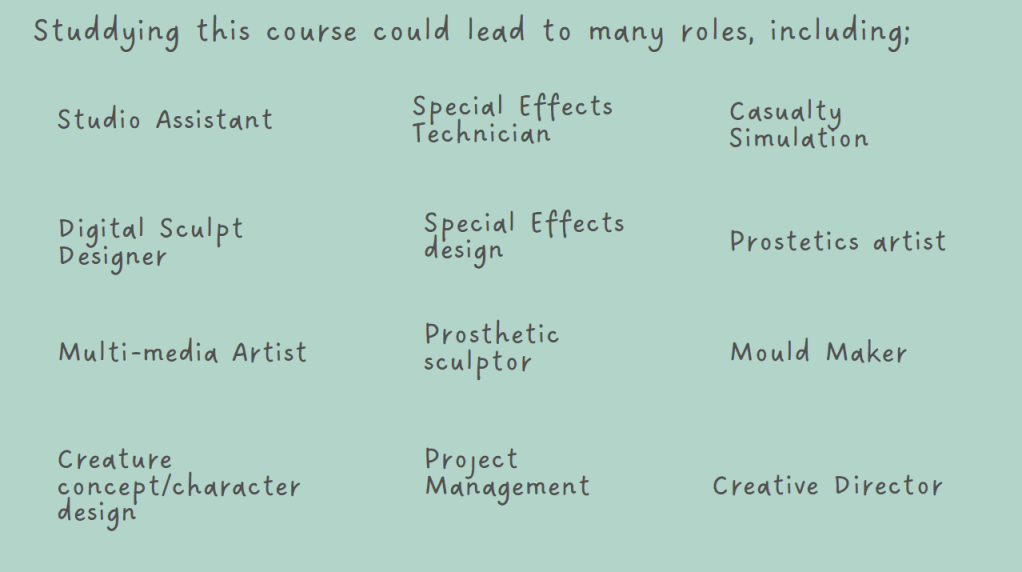
Here, I once again detailed a wider range of roles that may be progressed too after this course, re-iterating there are many options, not just the ones I have chosen to focus on.
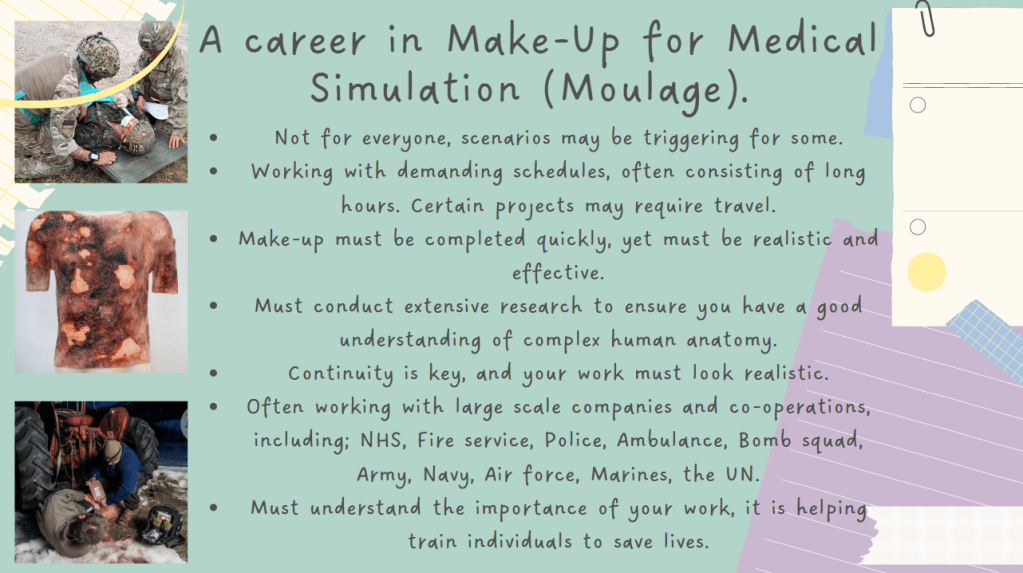
The final role I chose to present was a career in Moulage, providing Make-Up for Medical Simulation. I chose to detail this role specifically as it is not widely spoken about, in fact I didn’t even know it was a thing until I attended exercises with college – It’s one of those important roles that hides away in the background. On this slide I detailed all key information about this role to inform my audience of what the roles, responsibility, and salaries of this role may be. I also included some images as examples of the kinds of work that may be created.
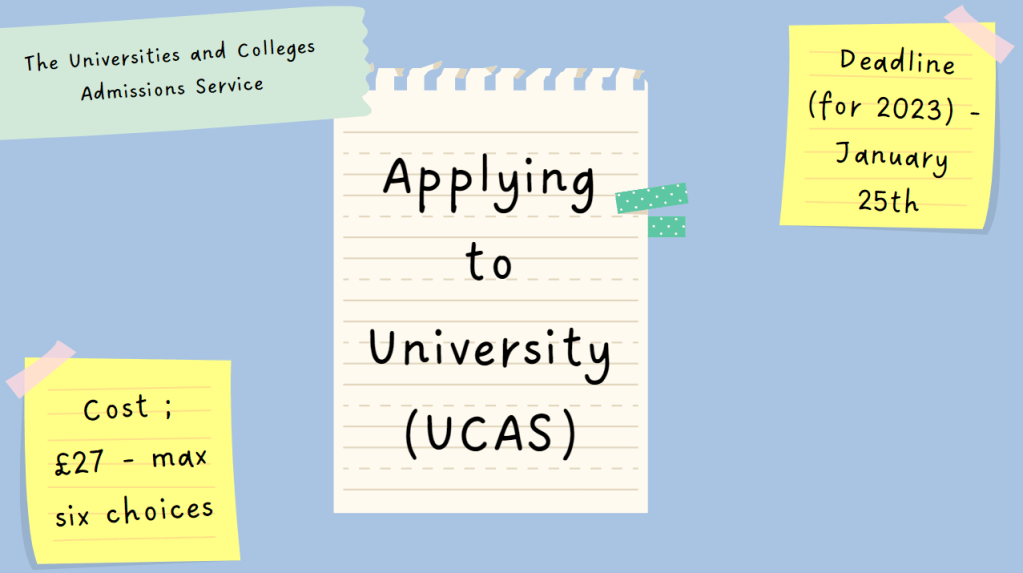
Here, I introduced the next section of my presentation; Applying to University. I also included some key information, such as the deadlines and fees for applying with UCAS.
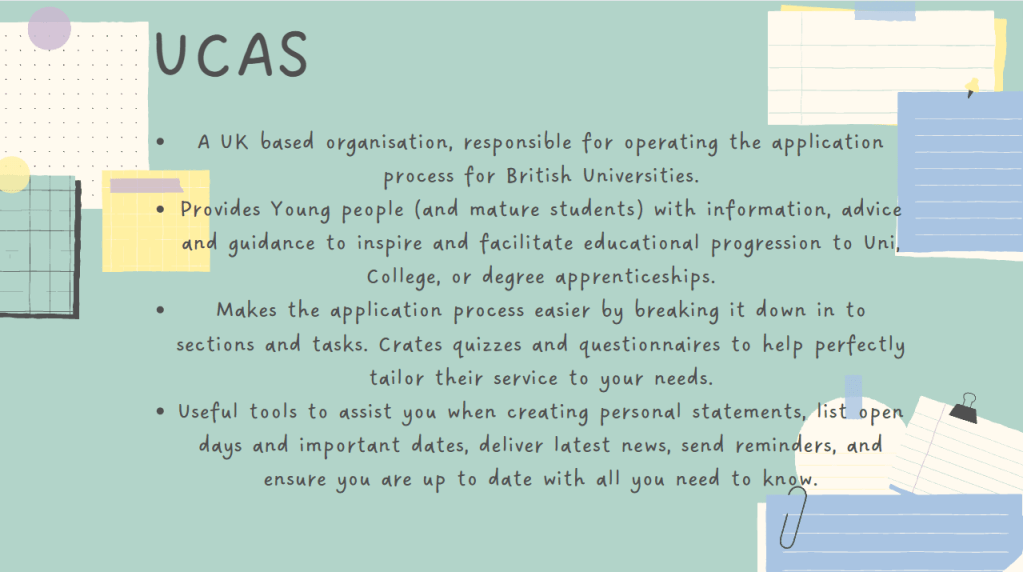
On this slide, I explained what UCAS is and what they do. I gave some examples of the services they provide to help tailor the experience to each individual student.
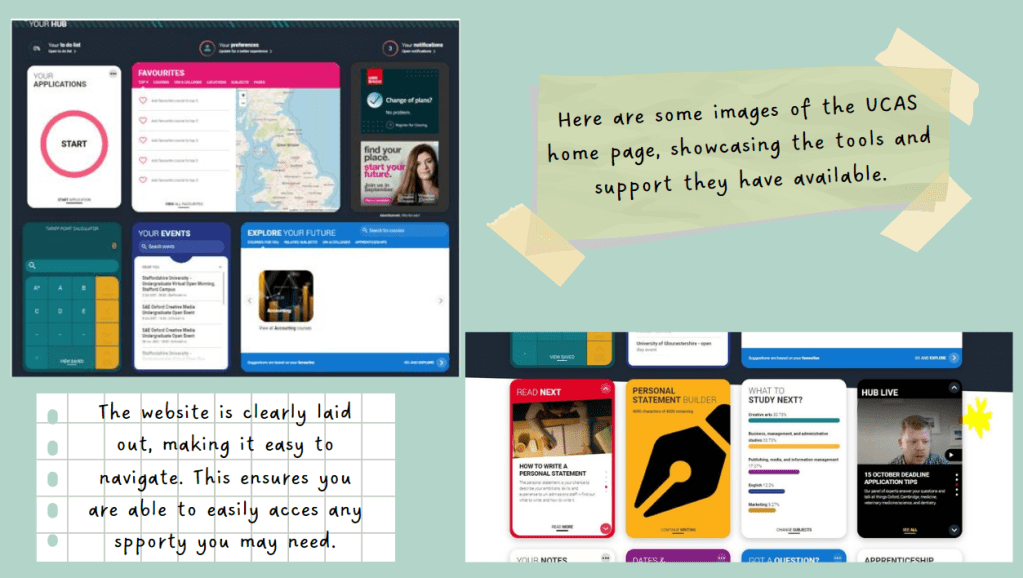
Here, I attached some images of the UCAS website, to show just how simple they make the process – therefore supporting my points.
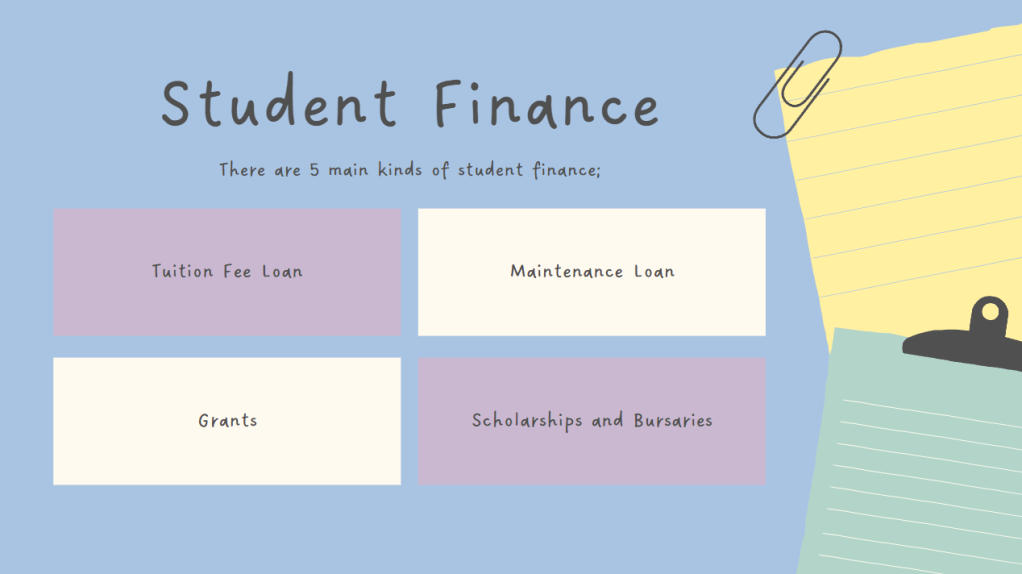
Here, I have another introduction page, introducing my section on student finance by outlining what I am about to present.
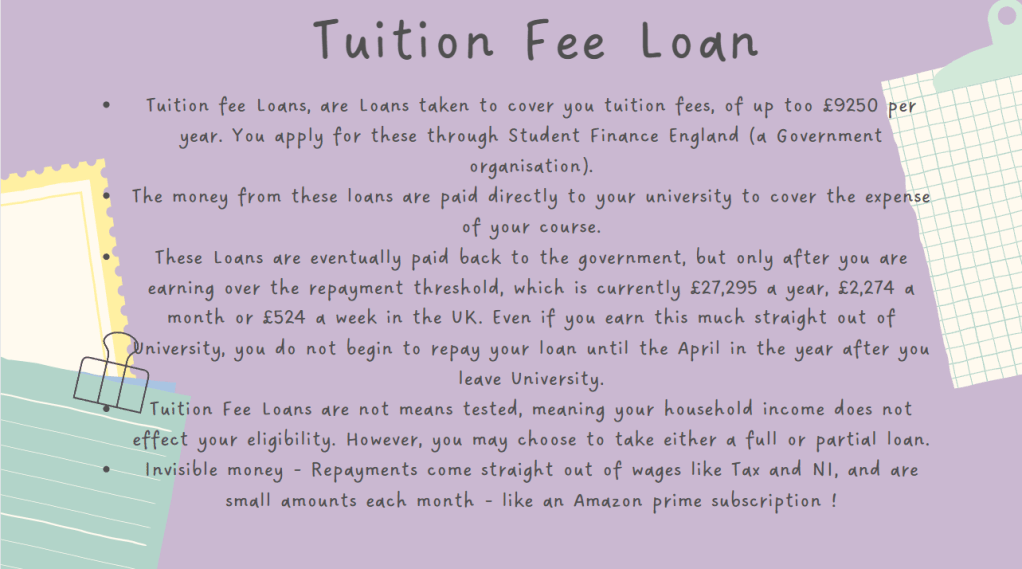
On the first slide, I detailed all the important information to know about when looking in too, or applying for a Tuition Fee loan. I explained what these loans are used for, as well as how to apply and when to re-pay.
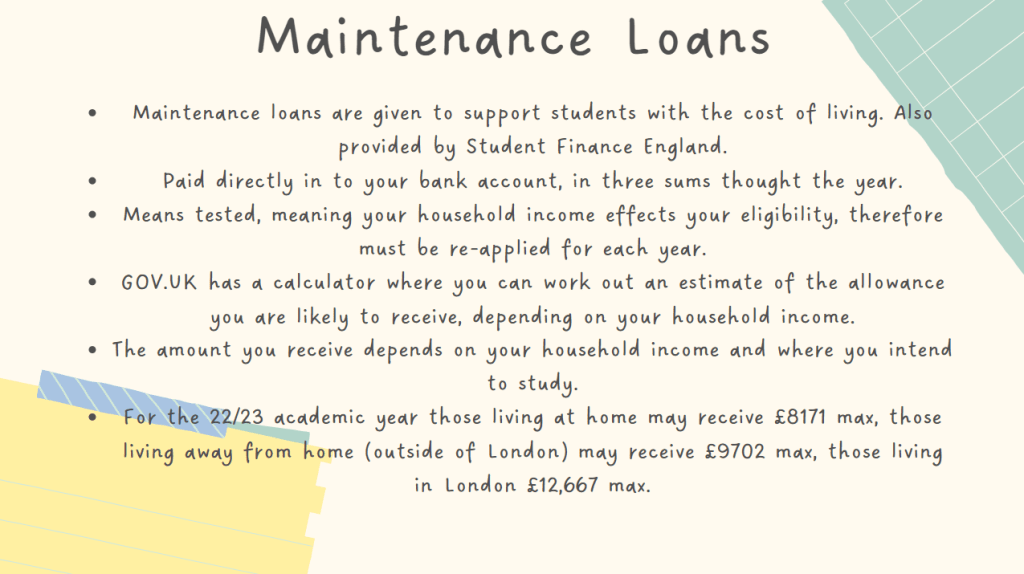
This slide is fairly similar, however here I detailed the same key information but for Maintenance loans.
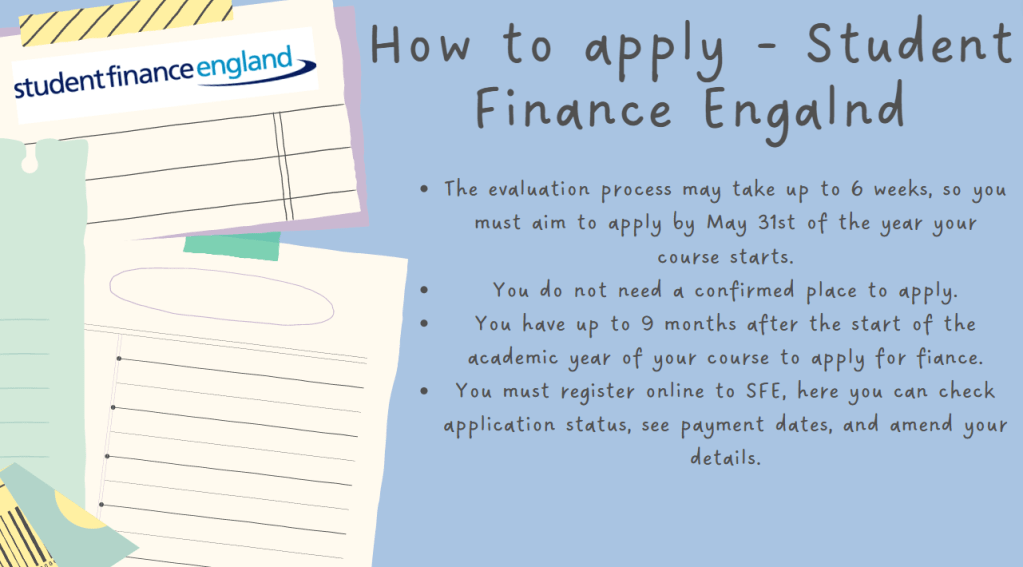
On this slide, I have included all key information about applying for student finance, including how and when this should be done.

I used this slide to provide all key information on how, when and where to re-pay student loans.
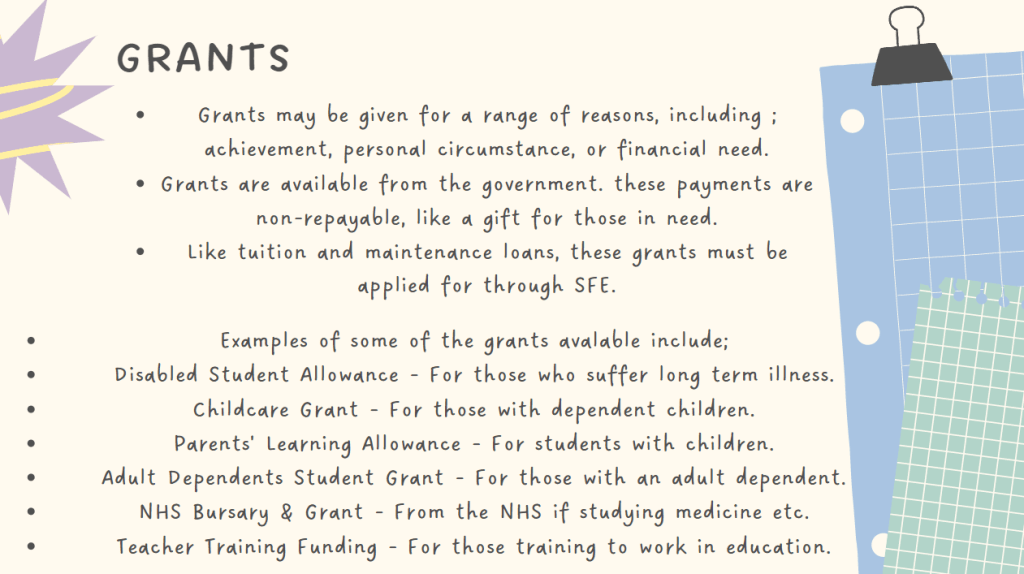
On this slide, I detailed student grants, what they are, how to apply, and provided some examples of available loans and information on who may be eligible.
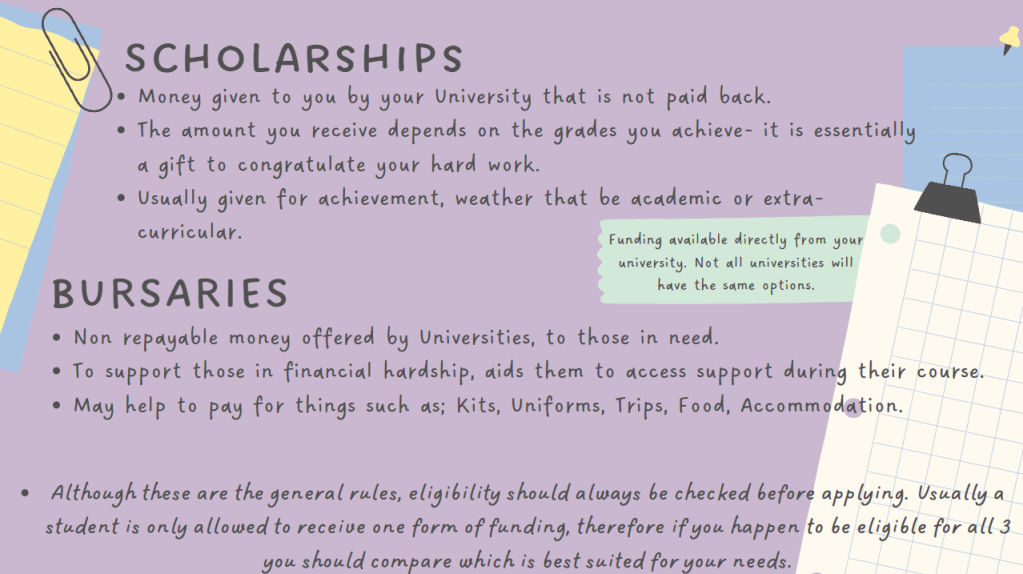
Finally, I provided all key information on student Scholarships and Bursaries. Here I detailed requirements, eligibility, and what each option is and what it’s for. It is important to note… as these options are provided through independent universities- not by the government- different universities may have different options, or in fact no options at all.

Then, I introduced my final section; Showcasing your work. On this slide I introduced the next subject by including images of my personal portfolio and professional CV, as well as including some important information.
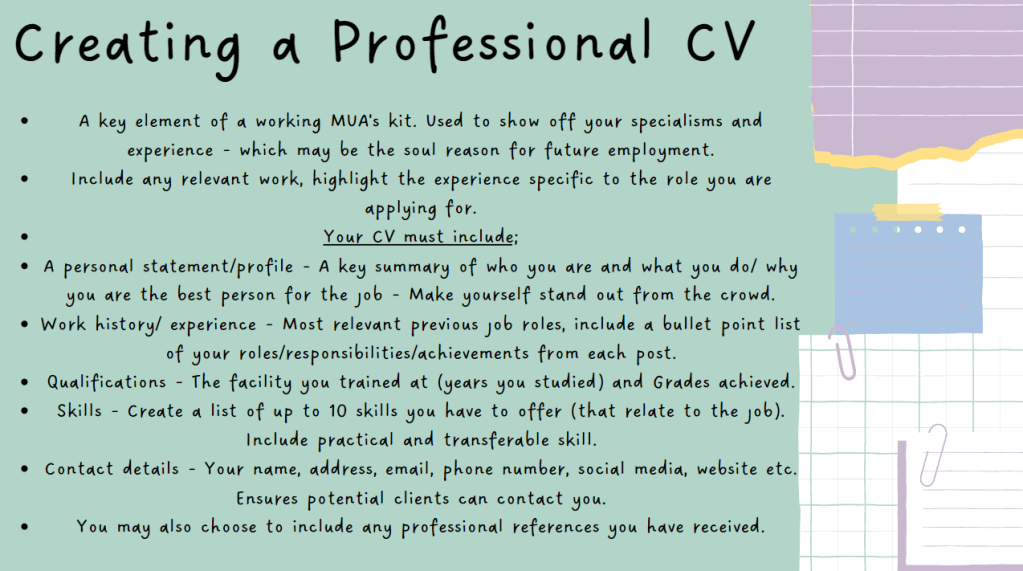
On this slide, I detailed what a professional CV is for , and why it is important. I also provided information on what should be included in these documents.
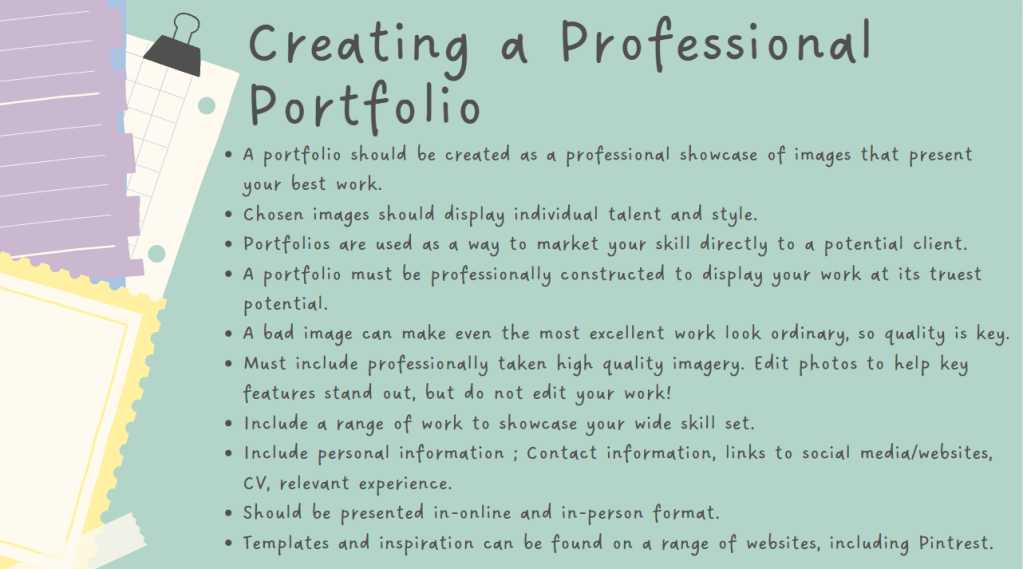
Next, I created a similar slide, this time explaining what a Professional Portfolio is, and why they are important. As well as providing information on what too, and what to not include in your portfolio.
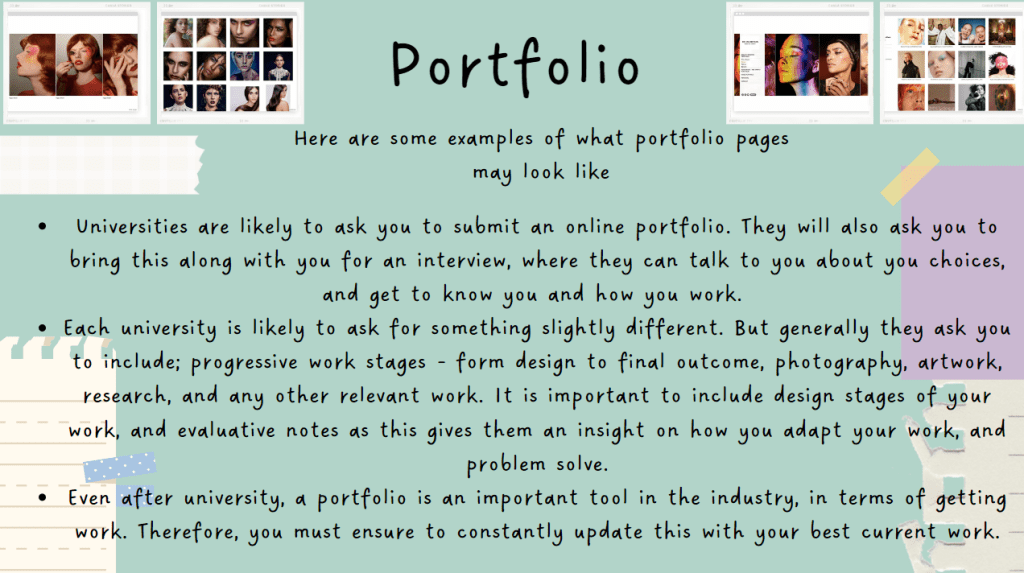
Here I provided some more information on portfolios, detailing what Universities usually expect. Furthermore, I added some images for inspiration, and named some resources that may be used to inspire my audience when creating their own portfolios.

Finally, I ended my presentation with this final slide, before asking my audience if they had any questions.
 Megan Hoff