For this task, I have researched in to popular fashions for men and women during the 1940’s, allowing me to create the most accurate finial image in my final SFX assessment.
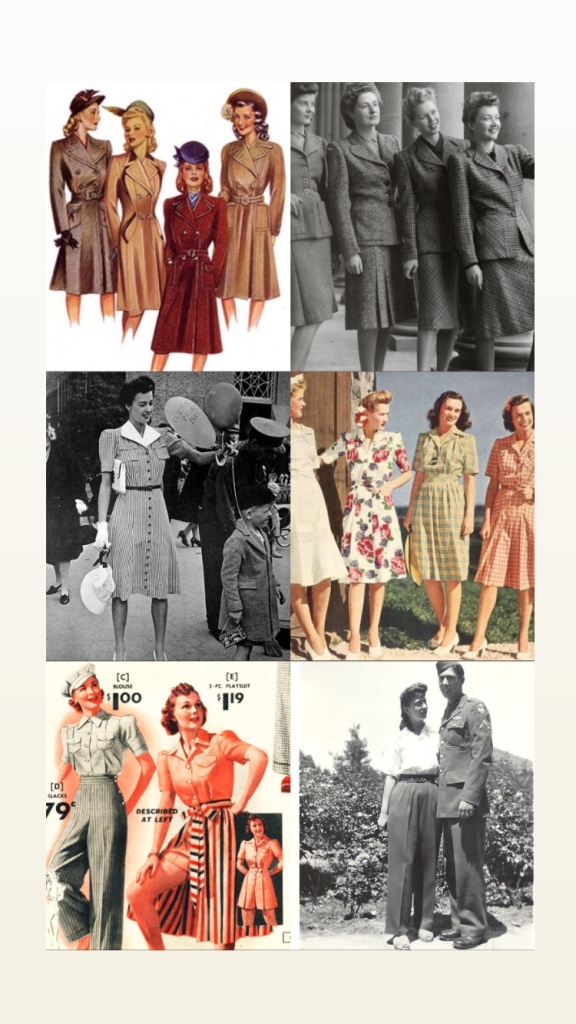
During the 1940’s, the main goal for women’s fashion was to create an hourglass silhouette.
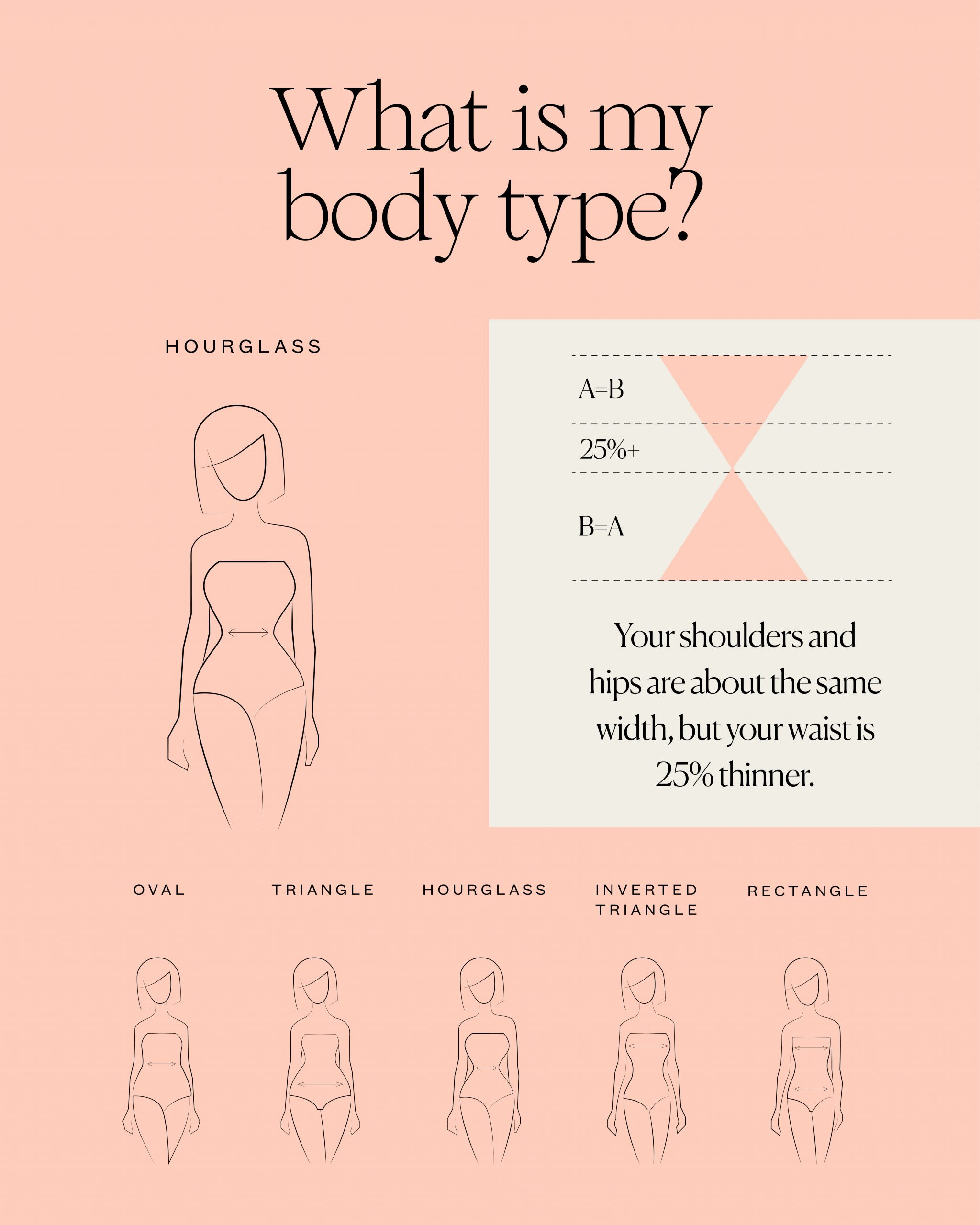
Masculine details such as padded shoulders were very common features of women’s clothing, along with nipped in shirts, and knee length, a-line skirts. Suits, dresses and trousers were all designed in fairly similar styles, with the goal of achieving the illusion of an hourglass figure. Clothes were designed to create this shape for all women, even those that didn’t have this shape naturally.

Just like many other industries, the fashion industry was hugely affected by the second world war. During the wartime, the goal was for clothing to be practical, while still making women look and feel glamorous. Women relied heavily on items such as hats, gloves, bags and jewelry to accessorize their outfits, and compliment the makeup looks they had created – helping them to put on a face of happiness, during the dark, difficult times of war.

The introduction of rationing also encouraged many women to create their own clothing items at home – re purposing old, worn items into newer, more fashionable pieces.

Fashion trends
Some of the biggest fashion trends of this decade include;
Knee length, a-line dresses with puffed shoulders.

Plaid a-line skirts, paired with white button down blouses.
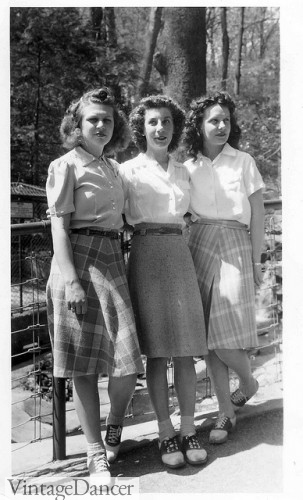
Victory suits – Man tailored shirt and jacket combinations.

Wide leg, high waisted trousers.
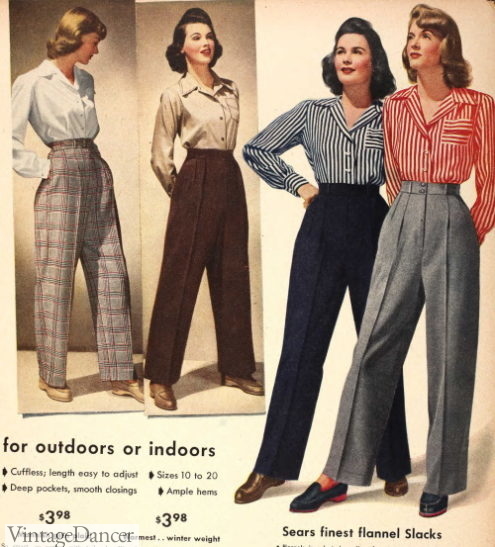
The Rosie the Riveter look (work wear) – overalls and jeans.

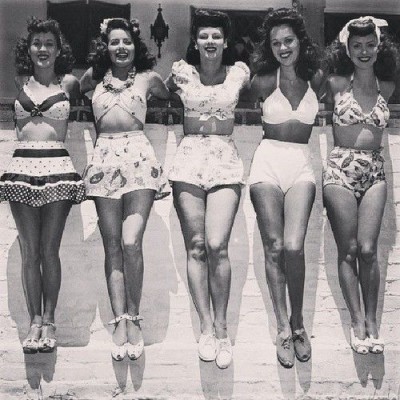
The debut of the two piece bikini.
Hats;
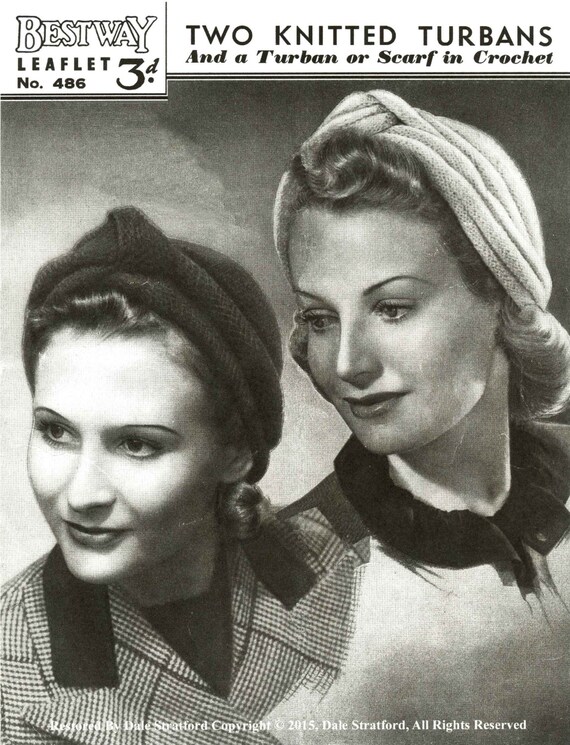
Turbans.
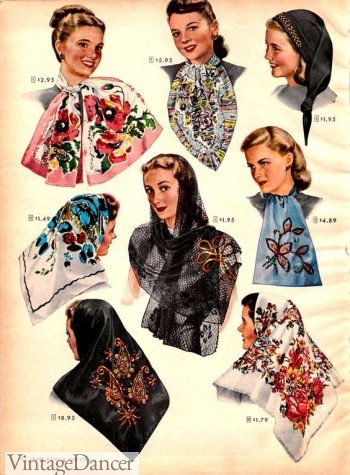
Head scarves.
Snoods.

Flower clips.
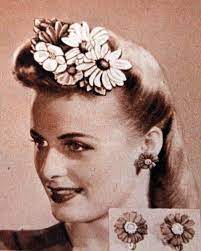
Ribbons and bows.

Shoes;
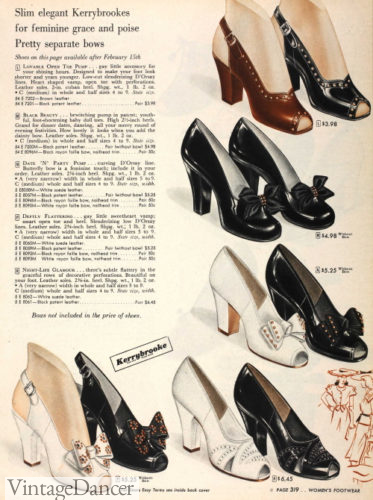
Peep toe heels.
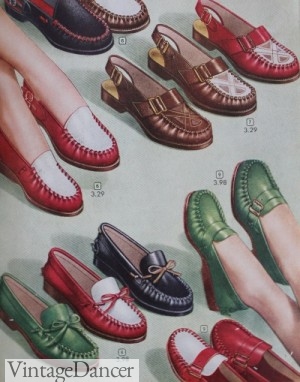
Loafers.
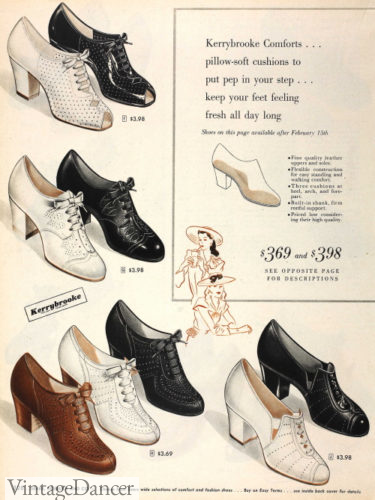
Oxfords.
Wedge sandals.

Dresses
The start of world war two brought strict rationing on fabrics. This led to dresses becoming shorter during this decade. During the 40’s, dresses were made to sit at the knee, rather than in the middle of the calf- like dresses from the 1930’s.
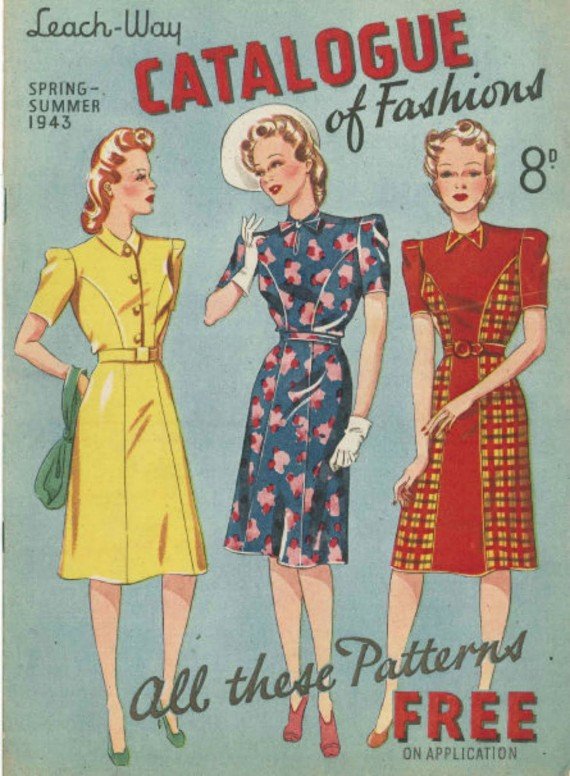
Shoulder pads introduced a masculine and militant look to ladies fashion. In the 40’s almost every dress, blouse and jacket was designed to be fitted with shoulder pads – that extended just past the edge of the shoulder.
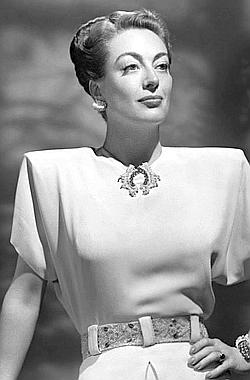
Women often paired this with a puffed sleeve, by gathering their sleeves toward the top of the arm, leaving them extended just below the elbow.
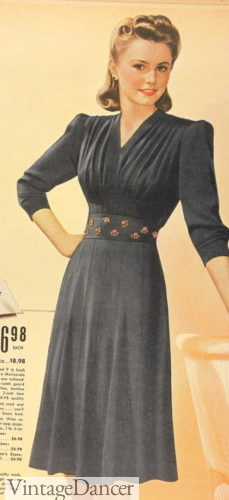
All dresses were designed to be very modest, revealing as little skin as possible. Necklines were available in variety of cutouts, including;
Square,
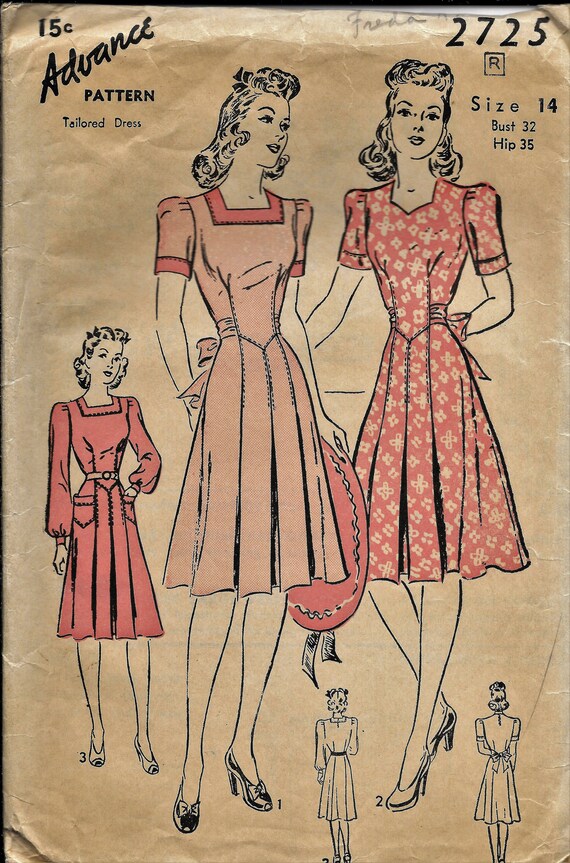
Slit,

Sweet heart,
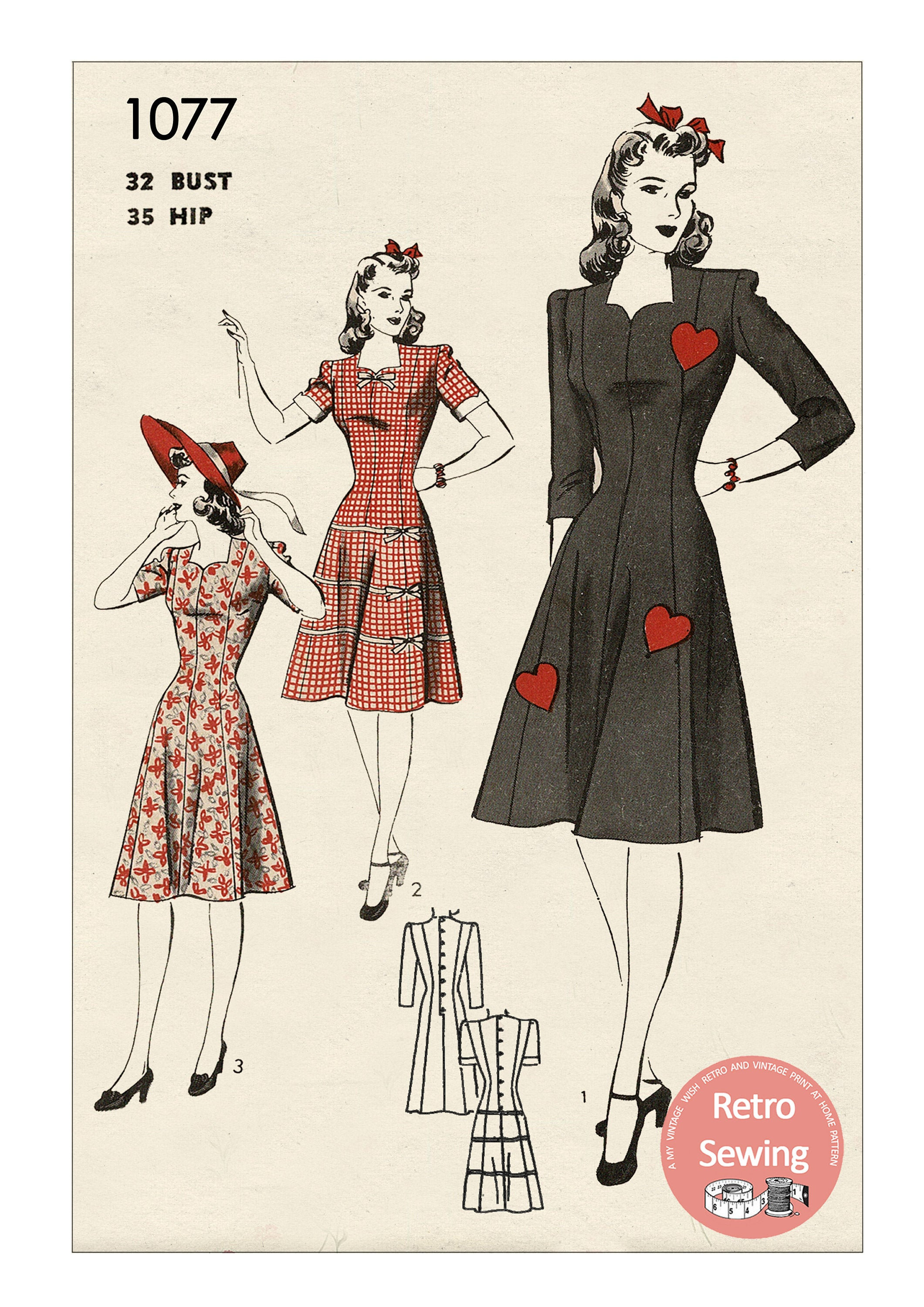
Cross front,
And v-neck.

Evening dresses however, were an exception to the rule. Most evening wear came with halter tops, and spaghetti straps – showing off one’s shoulders, and mild amounts of cleavage.

In the earlier years of the decade skirts were very long and sleek, but in the later years of the 40’s skirts became much more full.
Materials
Once rationing was lifted, soon after the end of world war two, much more fabric was available for use, and huge new varieties were released into production. Women began to embrace colorful patterns, with lace trims in a bid to forget the dark, and depressing years of war that they had just lived through.

Fabric material was usually made from rayon – a new synthetic invention. American cotton was another popular choice, especially for making house dresses, as its material was light and airy.
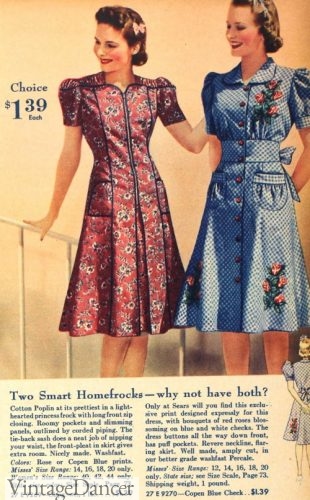
In contrast, stiffer fabrics were used to make suits and work wear – especially for the military.

Plus size fashion
During this period, plus size fashion began to flourish into its own. A category that was previously never properly catered for, finally gained recognition during this decade.

Companies now began to offer ‘stout’ size clothing in their catalogs and department stores. These ranges consisted of clothing designed to look more flattering on women with a fuller figure.

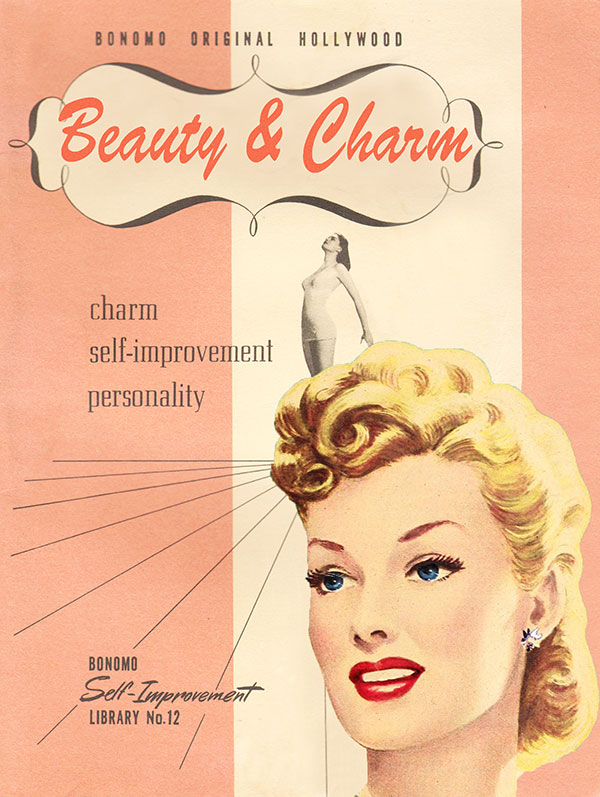
Beauty guides helped ensure all women were dressed their best by providing a list of fashion do’s and don’ts for women of all shapes and sizes.
Women’s suits
The shortage of fabrics brought on by the war rations, led to the popularity of the two-piece suit for women. These suits were also known as victory, or utility suits, during the 1940’s.
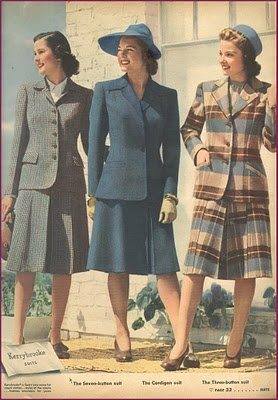
Women would mix and match their shirts, blouses and jackets to create a new look every day. Many women soon discovered how comfortable and practical these items were, and continued to sport these suits even after the end of the war – as a fashion choice.
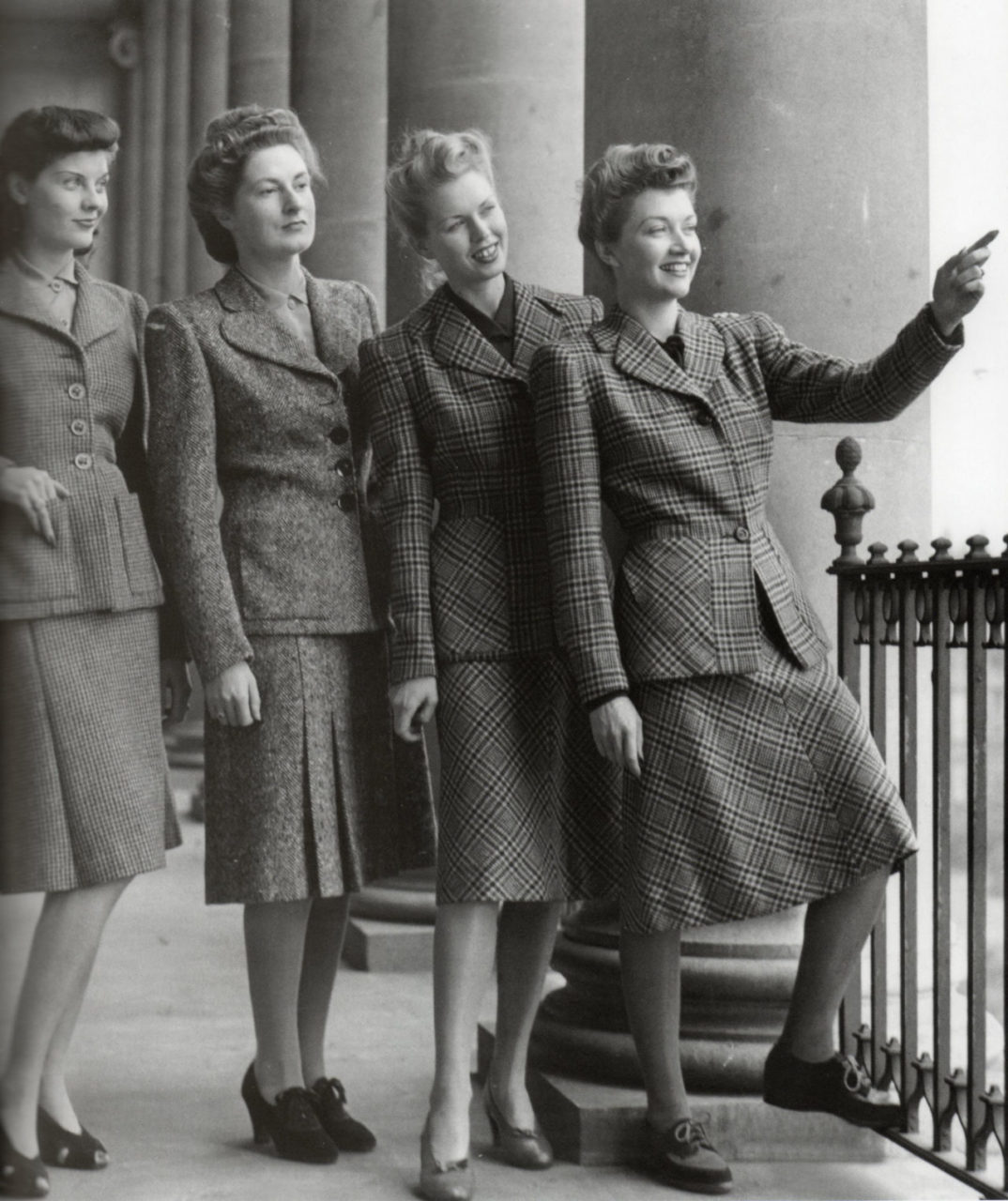
Suit skirts were often a-line, knee length skirts. Dresses and skirts in the earlier years of the 40’s were fairly plain due to the war rations, and shortages.

However, towards the end of the decade, plaids appeared on skirts, and some were even made with pockets.
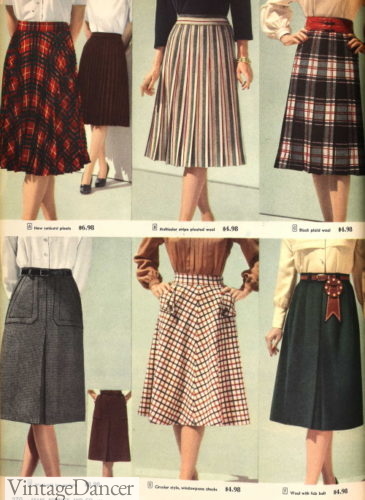
Plaid and striped skirts were extremely popular with teenagers and young adults, especially as they were easy to move in. This made them the perfect attire for swing dancing, the newest craze of this decade.

Jackets
The suit jacket was the finishing touch of any outfit. Jackets were made with the same material as skits, allowing for perfect co-ordination, however they were also often mismatched.
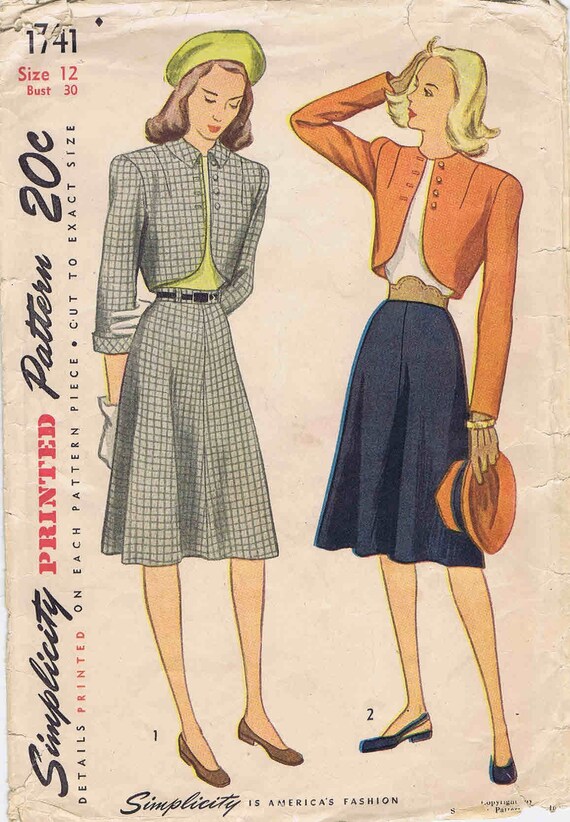
Suit jackets consisted of padded shoulders, high necklines and a nipped in waist, with a slight flare at the bottom – and most often sat at mid hip length.

Jackets were most commonly buttoned down, with plenty of variety to choose from. These jackets could have been worn without a blouse underneath, but wearing one under was much more comfortable.
A bolero jacket was another popular option, for women choosing a jacket to wear over their blouse. These jackets were often designed to show off the blouse, therefore did not button up. The sleeves on these jackets were often long and narrow.

Blouses
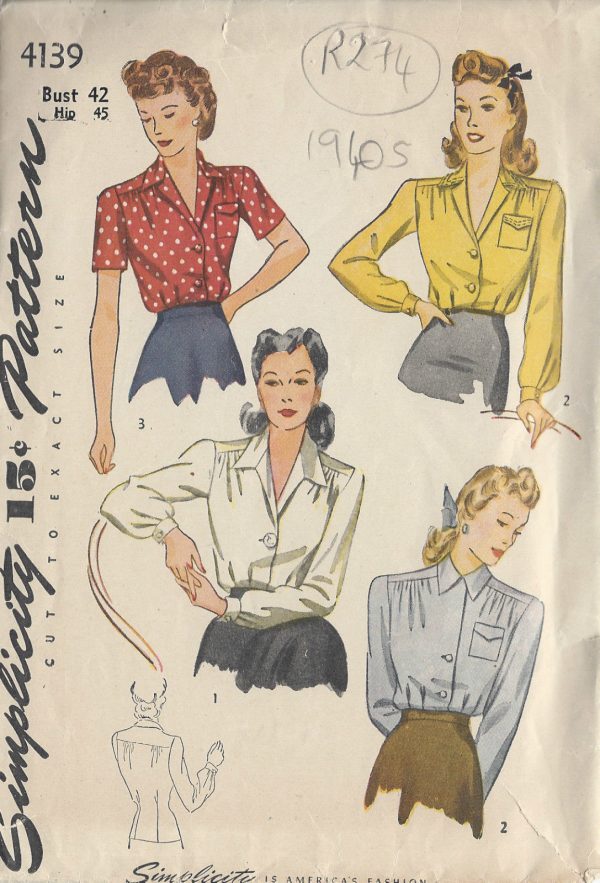
Blouses were a huge part of 1940’s fashion. They could be worn as the finishing touch of a suit, on their own, or with a cardigan over them.
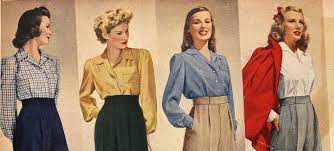
Solid colors and striped patterns were of the most popular choice for blouses – which usually came in a v-neck or peter pan collar neck line.
These shirts were often either short sleeved, or long with gathers on the upper arms, and wide cuffs at the wrist.
Trousers
Up until the 1940’s, trousers were worn primarily as a menswear item. However, when women started working in factories they needed much safer clothing options, to prevent them from any potential harm.

During the early 40’s, women would just wear men’s trousers. However, in the later years manufacturers began to produce trousers tailor made for women. These trousers still appeared very masculine, but were made extremely high waisted with zips or buttons down the side, and usually had wide cuffed legs.

Soon, trousers became an essential part of women’s casual fashion. It took many years for trousers to be allowed in professional jobs, or schools, but women began to wear trousers in public, after discovering the comfort and practicality that came along with them.

Overalls and coveralls were another work wear creation that eventually became fashionable for women.

Overalls would often be made from denim or cotton, and soon became the symbol of Rosie the Riveter.

Coats
During the earlier years of the decade, coats were usually very square and plain. These coats had few large buttons down the font, with long narrow sleeves and a variety of necklines. These coats were often long, sitting on the knees, enabling women to cover up.
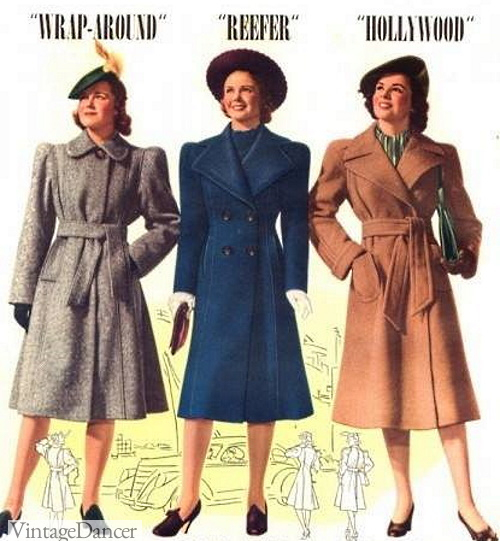
Shorter, box coats that hung at the hip, in a wide cape like fashion, were another popular choice. These coats had big bell-like sleeves.
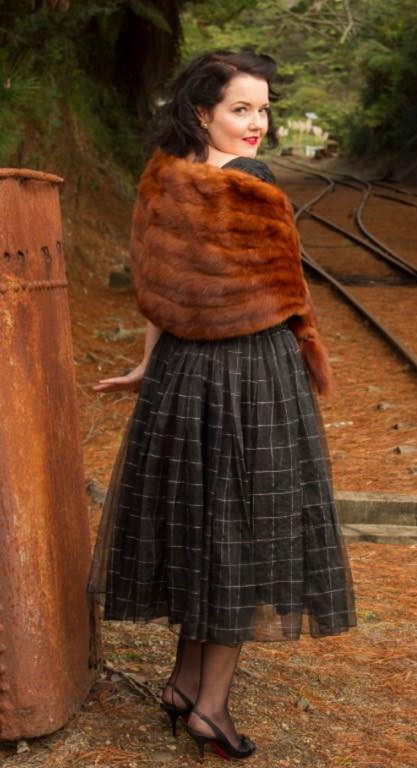
A fashion from the 1930’s – fur trims – remained popular during this decade. Fox fur was the most sought after, and many other furs were dyed to look like fox.
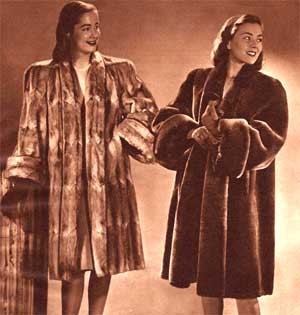
For formal events, women almost always wore fur stoles and capes.
Shoes
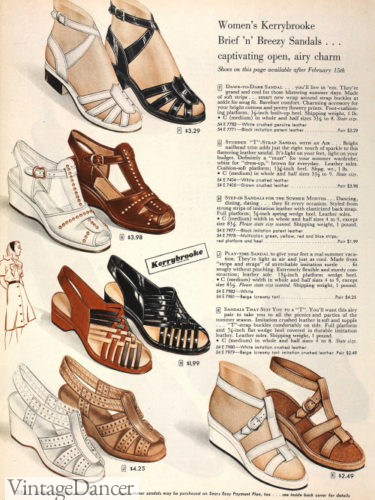
During the 1940’s, many materials such as leather, were rationed from the fashion industry. This meant materials such as velvet, mesh, reptile skins, and wood were used as alternatives in shoe production.
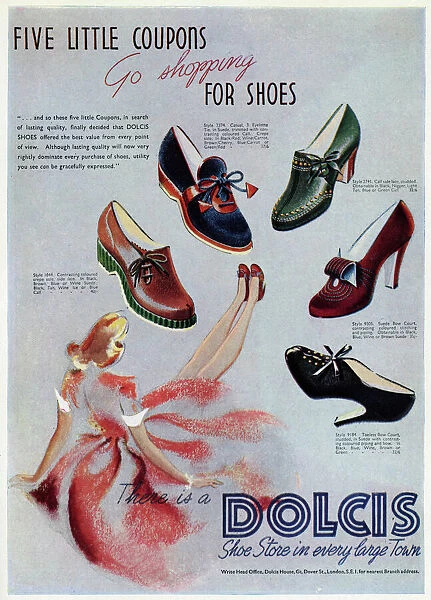
Unlike the elaborately decorated shoes of the 1930’s, shoes were made to be very simple and sturdy, during the 40’s. In the earlier years, these shoes were very chunky, and heels were very short and thick.
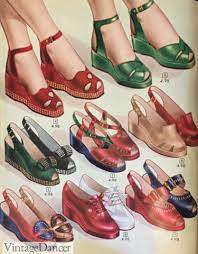
However in the later years, pumps were introduced,and heels became much thinner.
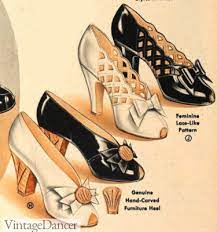
The 1940’s is remembered in fashion history for popularizing the wedge shoe. A wedge shoe consisted of a sole that was made from one piece of material, giving a moderate height to its wearer. These shoes came in solid slip-on’s, summer sandals, or peep toe styles, and were considered much safer than taller pumps.
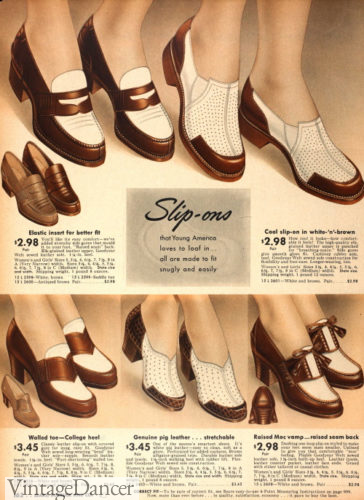
Oxfords and saddle shoes were another popular choice, for casual wear. The rounded toe of these shoes added a masculine touch – but this didn’t stop them from rising to popularity with all kinds of women.

Slip on loafers were another popular choice, due to their casual appearance and comfortable wear.
Swimwear
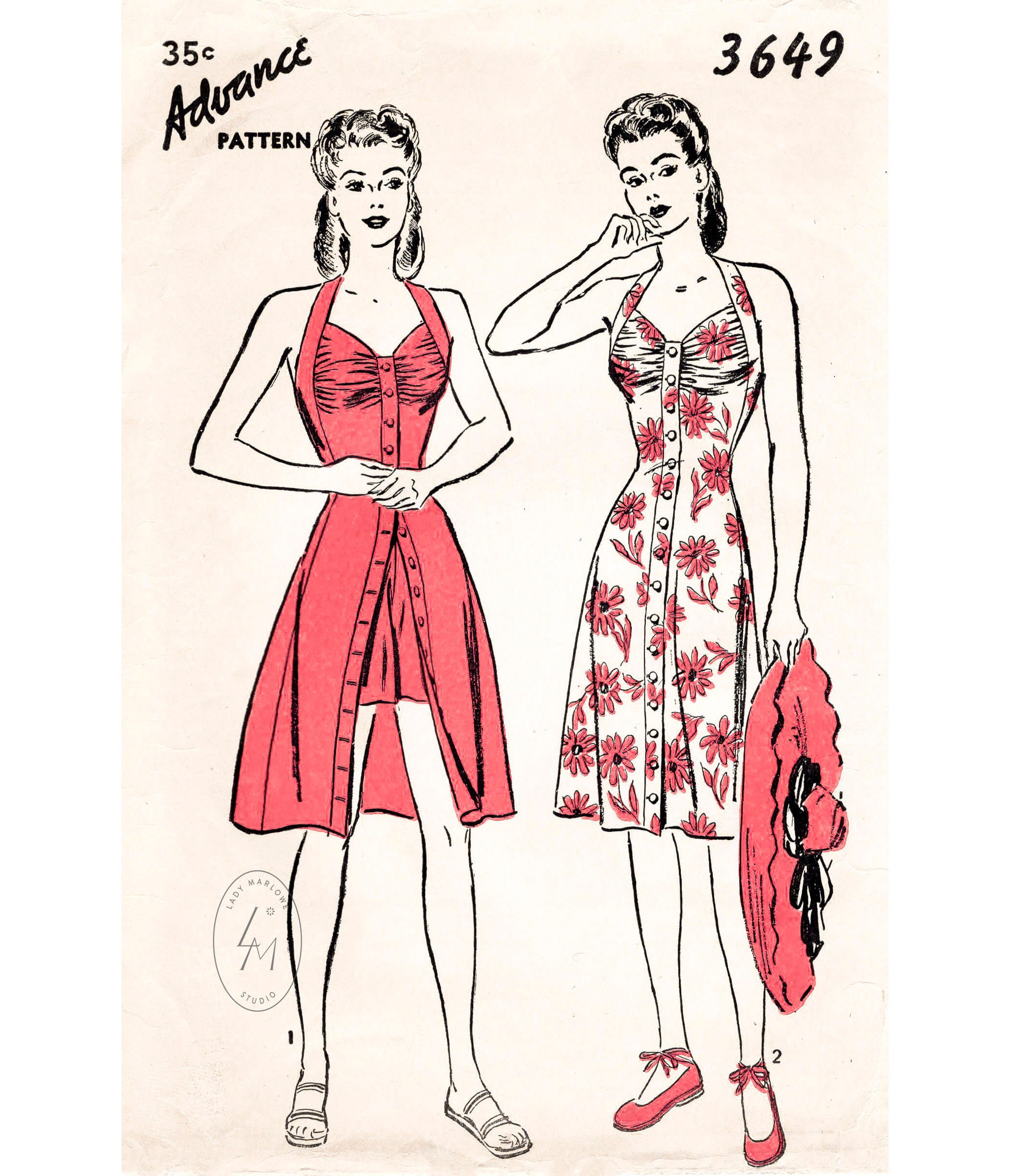
In the 1940’s, the two-piece swimsuit was released for the first time.

At the time, one piece swimsuits usually came with a halter style top, and bottoms that came to the top of the thigh, usually in a skirt shape but sometimes as loose shorts. The one piece swimsuit became much tighter and more fitted during this time too.

Two-piece swimsuits had a very similar design to the one piece, they just had the middle cut out. Bottoms came up above the belly button, with only around 4 inches of space in between the top and bottoms.
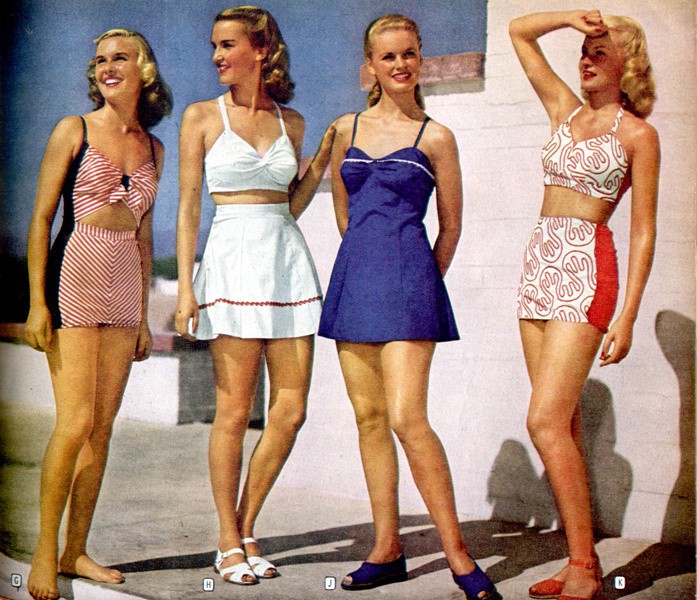
Furthermore, in 1946 the bikini was released, consisting of a much similar look- just tighter and much lower on the waist. Although popular in today’s world, the bikini was far too revealing for most women in the 40’s.
Beach wear was made, often in the form of a play suit – a short dress made to wrap around a swimsuit. These dresses were often button down, loose fit dresses, made from light cottons.
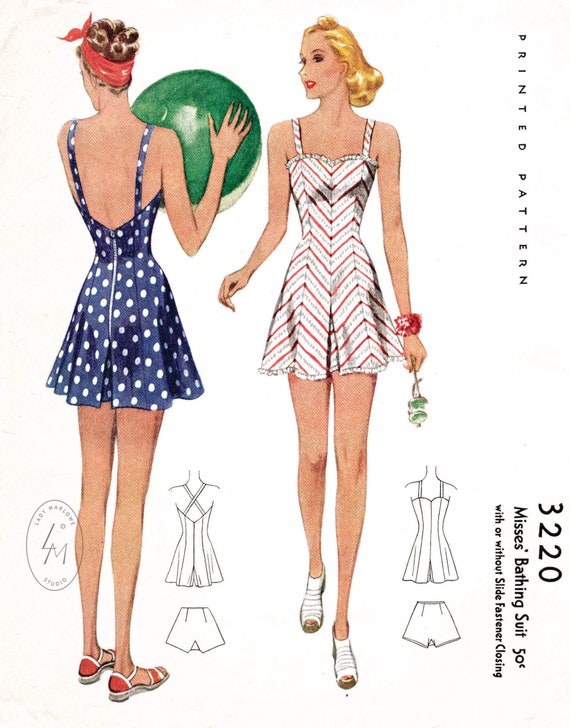
You could also buy high waisted shorts and halter style tops to cover up before or after a swim. This style was most popular with teenagers, and younger, single women.
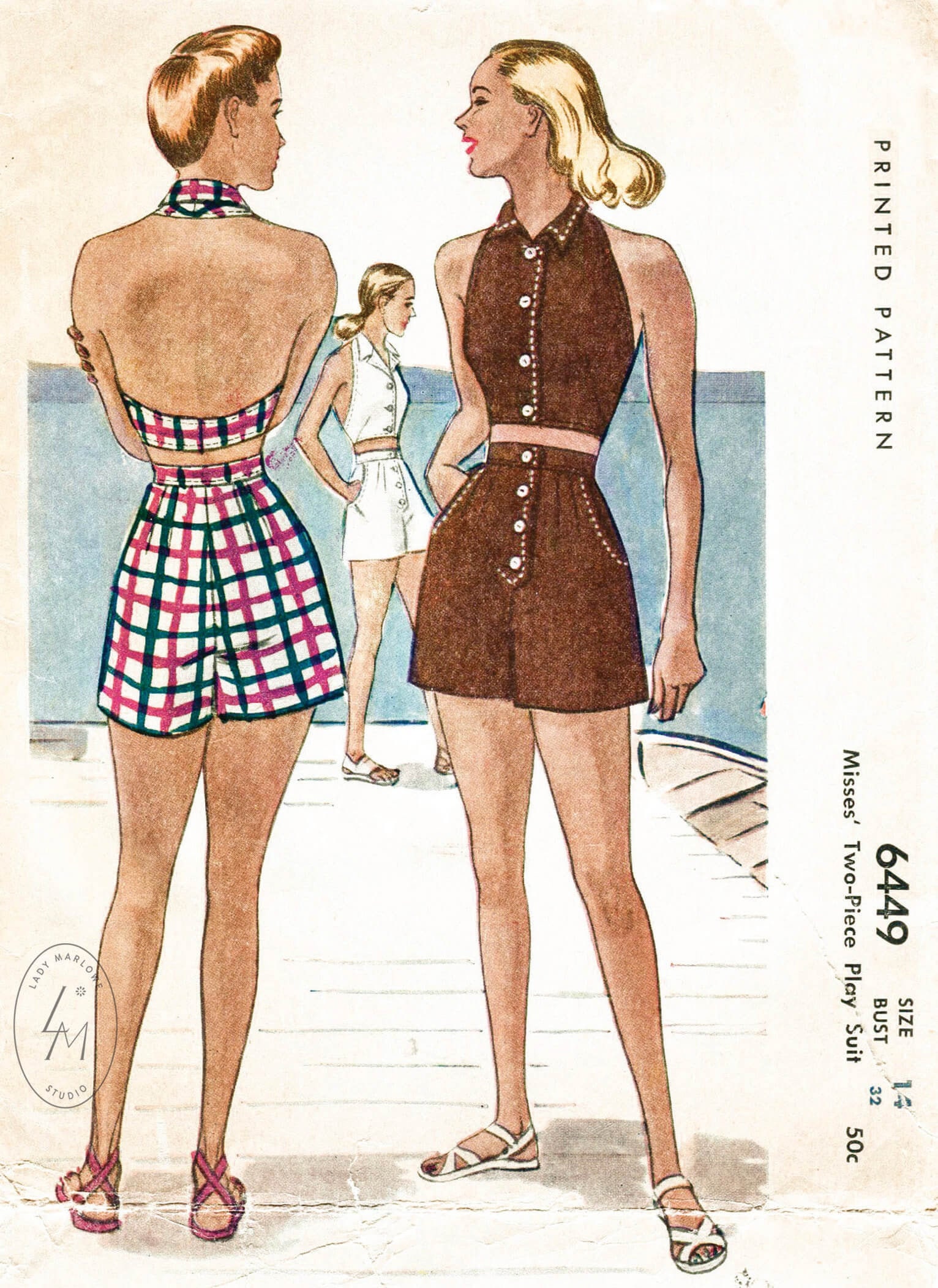
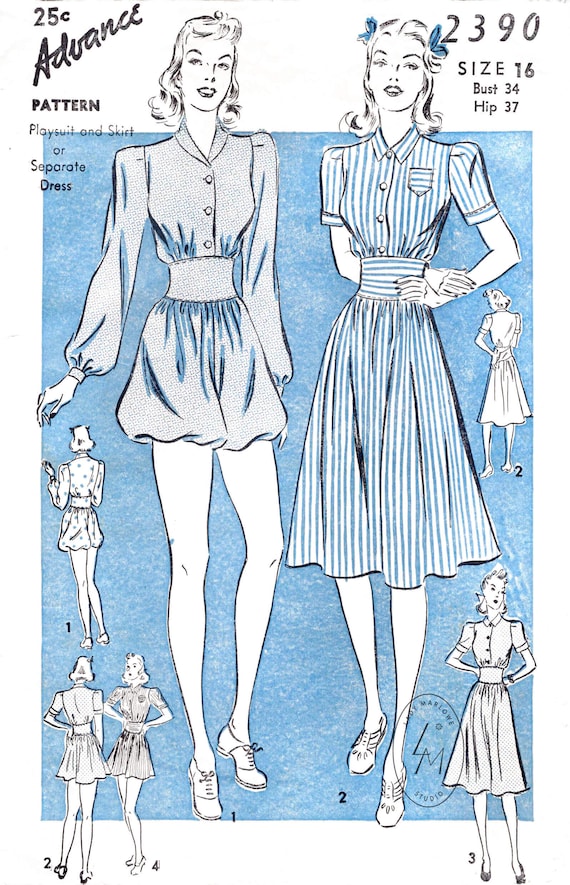
Older women wore ‘play clothes’. These were much larger and more conservative than the play suit that younger- middle aged women would often wear.
Hats
In the 1940’s, head wear was very popular and very diverse. Outside of military uniform, women wore hats often – as a fashion accessory. Few new styles became popular trademarks of the 1940’s, these include;
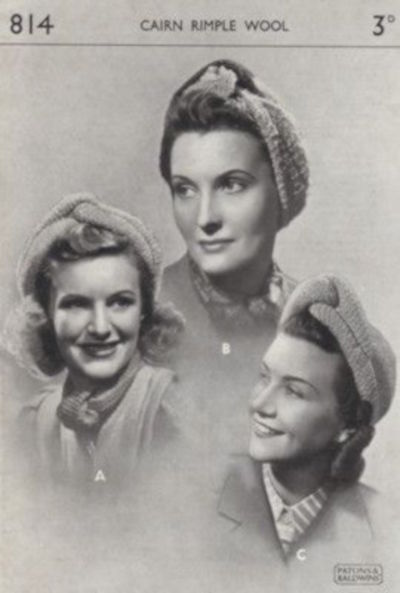
The Beret – A one piece, flat, round, french inspired hat that sat either on top of the head, or slightly to the side.

The Turban – A piece of fabric that was worn wrapped around the head, with its excess tucked in underneath. Women would usually decorate these with flowers or jewels.
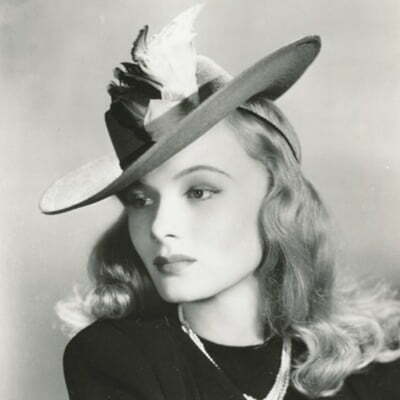
The ladies fedora hat – One of the several styles that took its inspiration from men’s fashion, these hats were a popular choice among women across the United States of America.
Hair snoods – Created to help keep the back of the hair tidy, and kept out of the face. This became an important part of the working woman’s routine, as keeping their hair secured back out of their faces kept them safe from dangerous incidents – such as getting their hair caught, and pulled out by machinery.
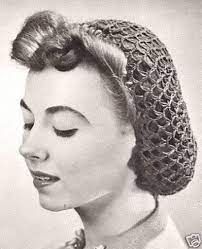
Head scarves – Another popular choice among working women, the headscarf helped keep the hair clean and out of the face while at work. This style was made popular by Rosie the Riveter.

Gloves
Much like shoes, gloves became very plain during this decade, as the war rations caused the scrapping of any intricate detailing that may have been used as decoration in the years before.
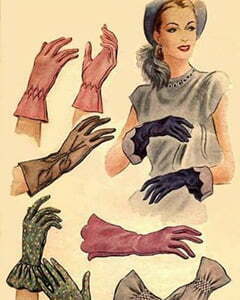
These gloves were often worn for semi-formal occasions, like going for lunch, and were often color matched to one accessory, such as a hat, bag or belt.
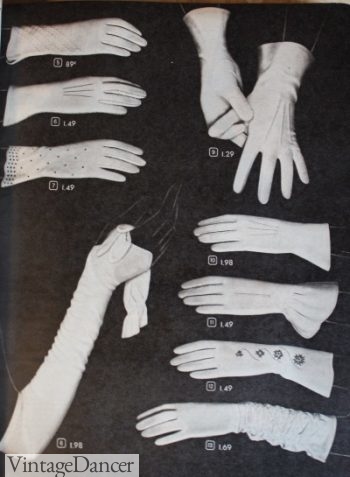
Natural colors such as brown, tan, navy, and white were most popular, as was a mid arm length.

During formal, evening events, long opera gloves would be worn with extravagant ball gowns.

Jewelry
During the somber wartime of the 1940’s, jewelry was an important part of any women’s outfit. Bold necklaces – with bright colors and large beads, were worn alongside bold floral brooches and chunky earrings.

Women used their jewelry to add cheerfulness to their otherwise dull outfits. Rationing called for the use of new materials, making jewelry much cheaper and more accessible to everyday women. Jewelry was created sticking with the patriotic theme, made with the ‘v or victory’, or made in the colors of the flag – allowing women to show the love they have for their country, through their accessories.

Hand bags
Moving on from the small clutches of the 30’s, women now need larger, more practical bags, to assist them while they fulfill their duty to work.

Military messenger bags inspired day bags, created with a long shoulder, cross body strap.

Alternatively, many women used larger, flat, envelope type purses as a prettier, more feminine option.
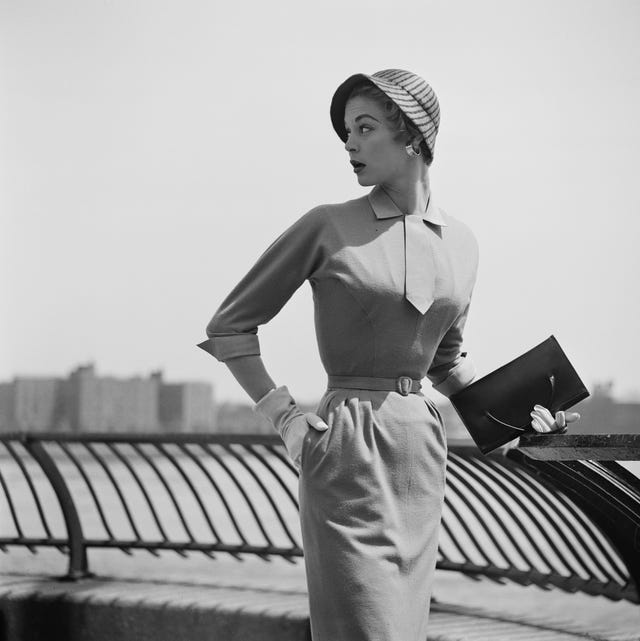
For evening wear, bags remained much smaller, and were usually made with black satin – to create a shiny finish. There was a large variety of beading options available, to add a touch of elegance and sparkle onto a bag.
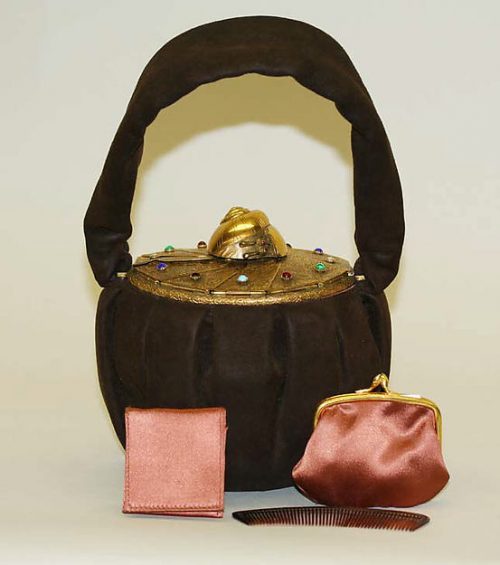
The end of the war called for the release of new, brighter options. Bags and purses returned to geometric shapes, and became available in new bold colors, like; red, green and yellow.

Underwear
In the 1940’s, women’s under garments were designed like shape wear, to create a perfect hourglass figure.
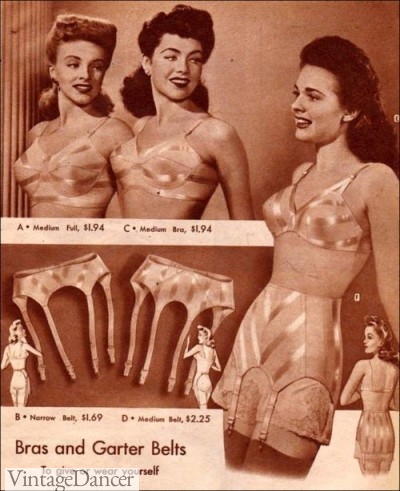
Tight, belly hugging girdles were created to remove any visible imperfections, but were extremely uncomfortable to wear.
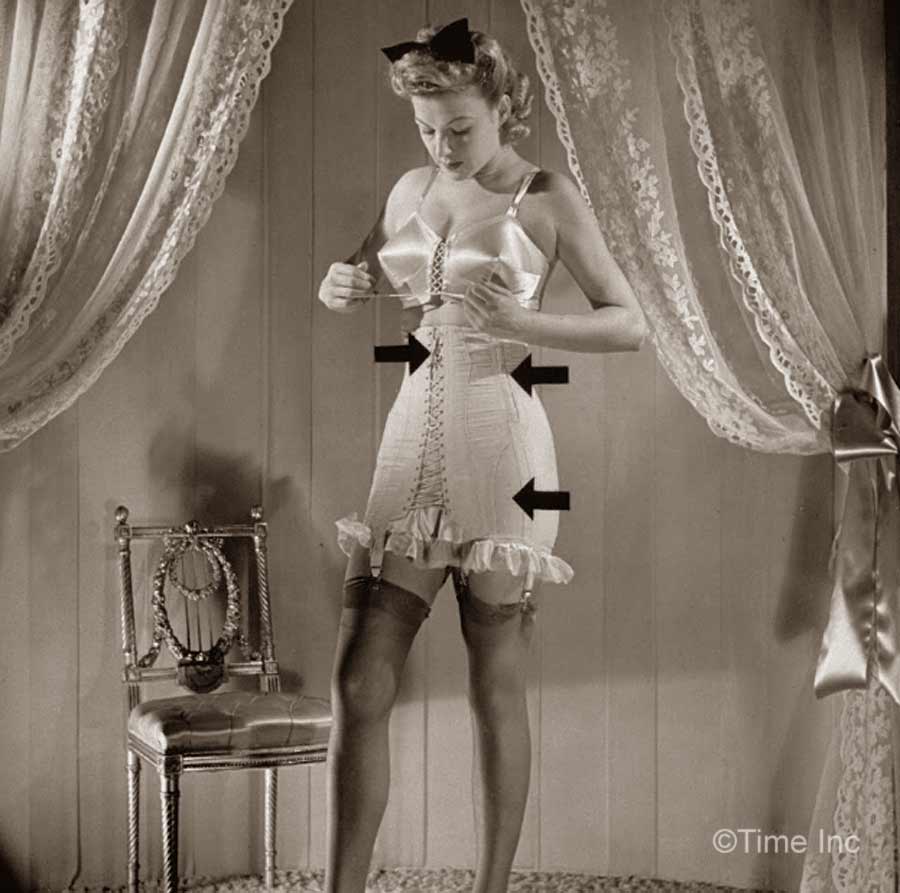
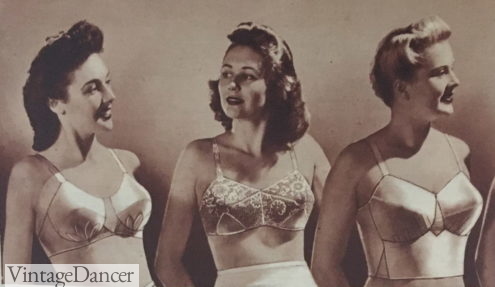
Bras in the 40’s were usually large, with full back coverage, and were designed to encourage a woman’s naturally rounded shape.
The release of shorter dresses also saw a skyrocket in the popularity of stockings – as women wore stockings to help them feel more covered, and less naked with so much skin showing.
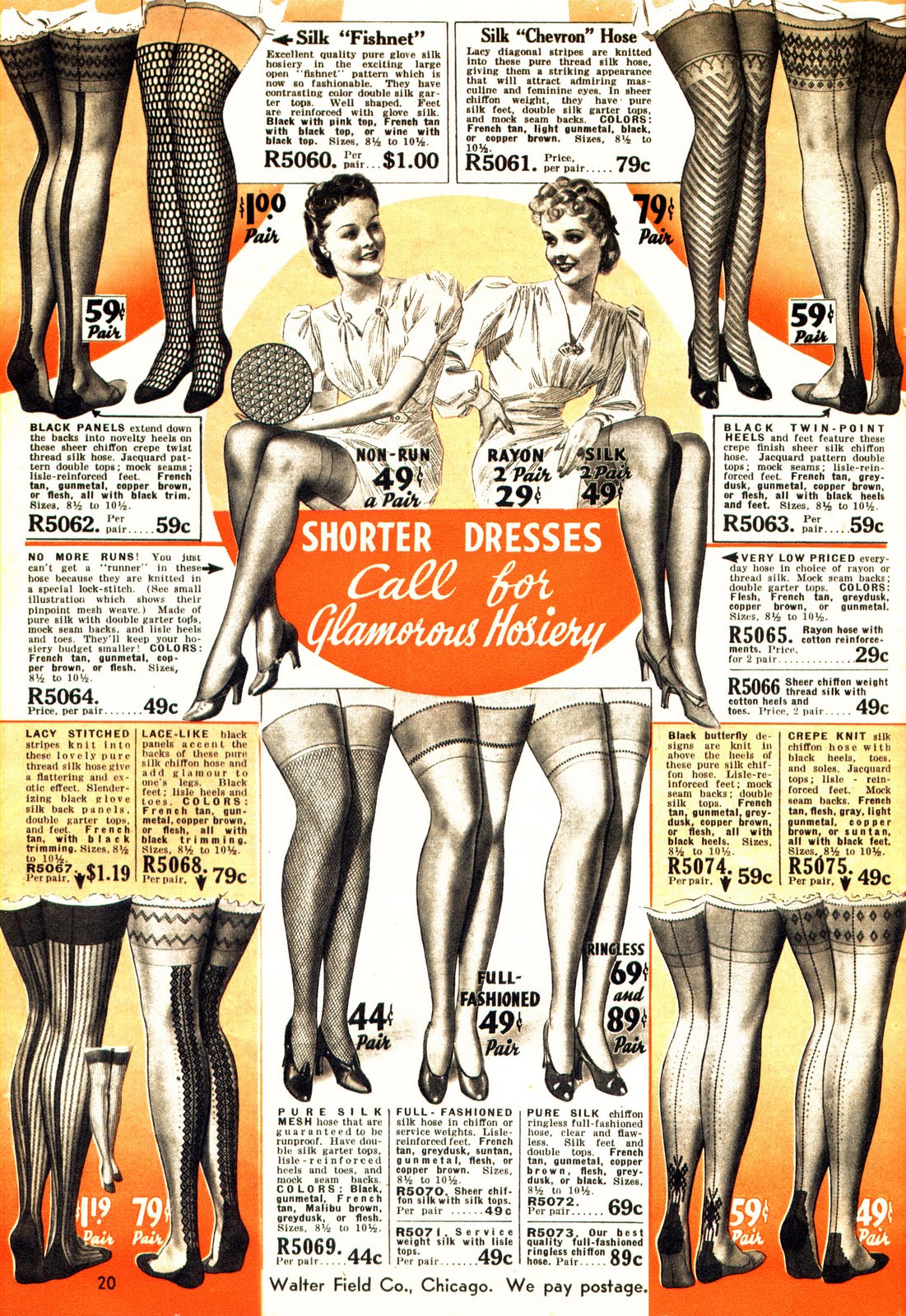
Stockings only came up to the thigh, meaning women would have to fasten their stockings to garters, in order to keep them in place.

Both nylon and silk were used in stocking production before war rationing was introduced, however the rationing left women desperate – turning to makeup to create the illusion of stockings.

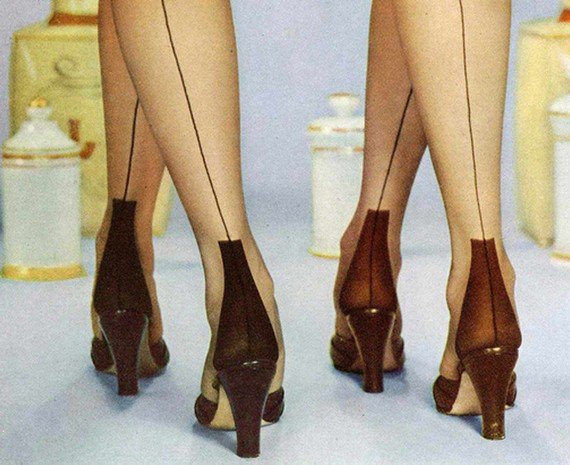
In the earlier years, stockings tended to have a large, visible seam at the back of the leg. However, by the end of the decade seamless stockings were the most popular option.
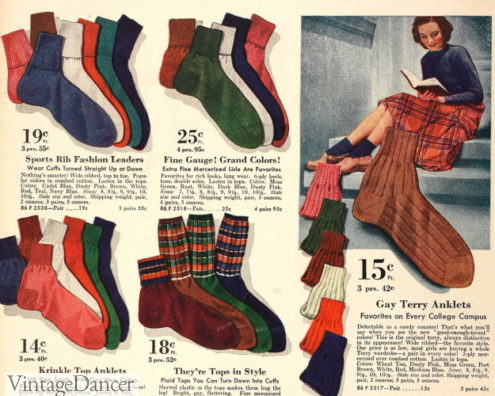
Working women tended to prefer wearing socks. A trend from the 50’s, bobby socks and saddle shoes, was actually started in this decade.

Most working women wore socks in patriotic colors, instead of stockings, as they were more comfortable, but this also allowed women to present their pride to the world around them.
Military uniform
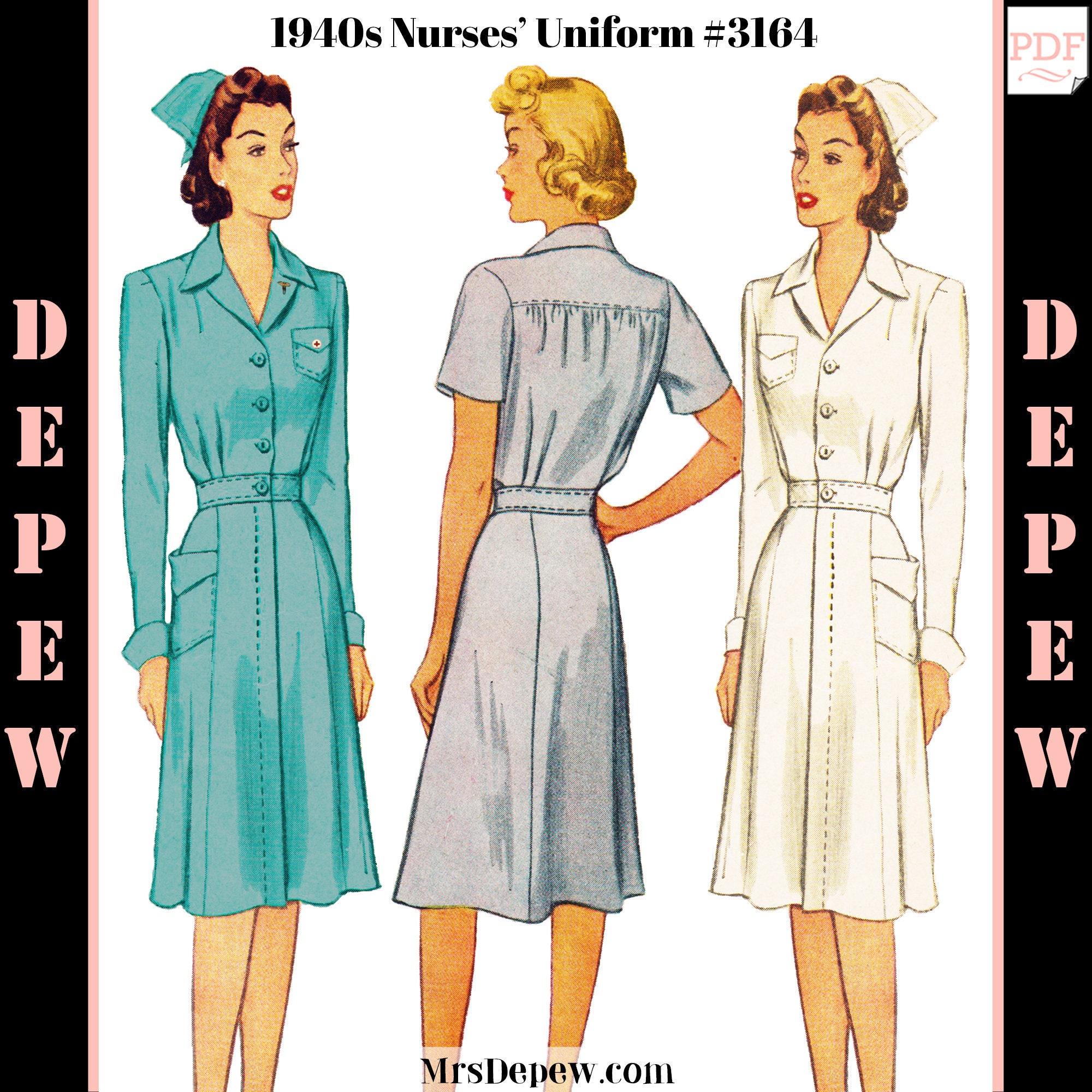
Apart from color, all uniforms for women in the armed forces were fairly similar.

These uniforms often consisted of hats, blouses, neckties, jackets and skirts, finished with stockings and smart shoes.
Men’s fashion
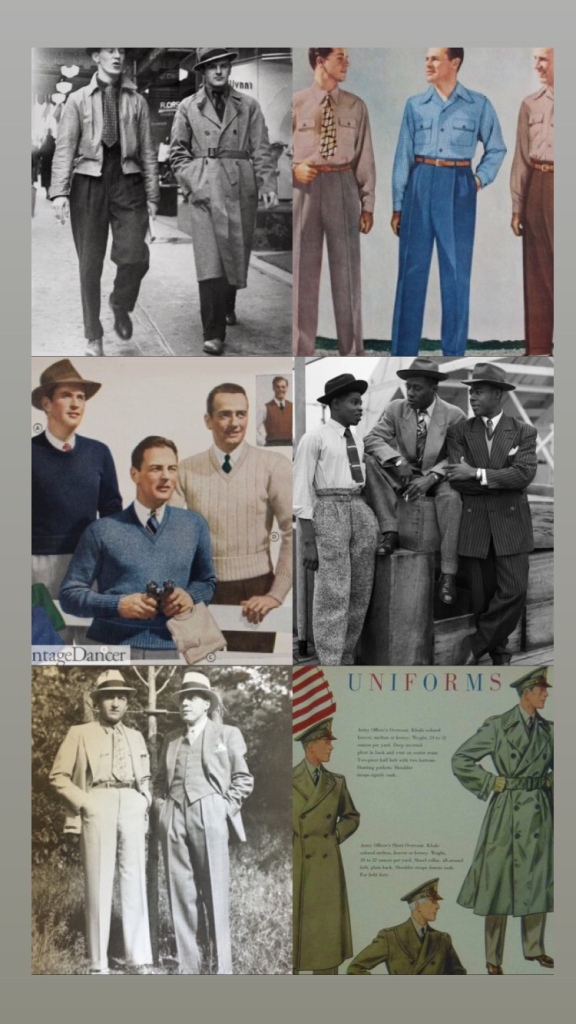
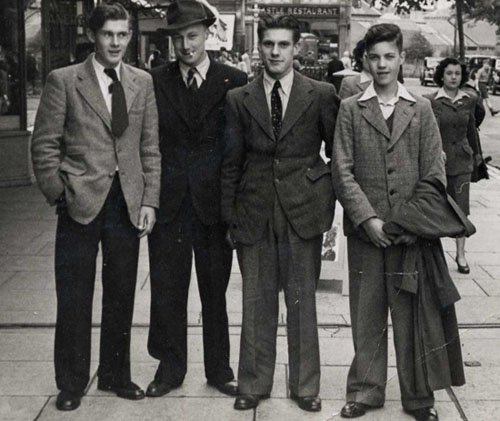
As previously mentioned, during the 1940’s all aspects of life were overtaken by war. When out of their military work wear, men usually wore suits.
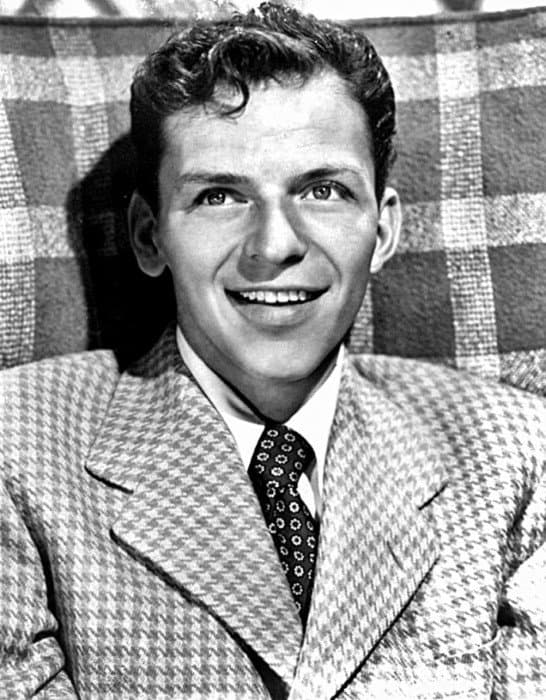
Rationing caused major changes in fashion production, meaning these suits were now made with a wool-rayon blend, rather than pure wool. These suits were also often patterned, mainly with striped fabrics.

The victory suit was an extremely popular choice for men in the US, however due to war these suits were now much looser, compared to those of the previous years.
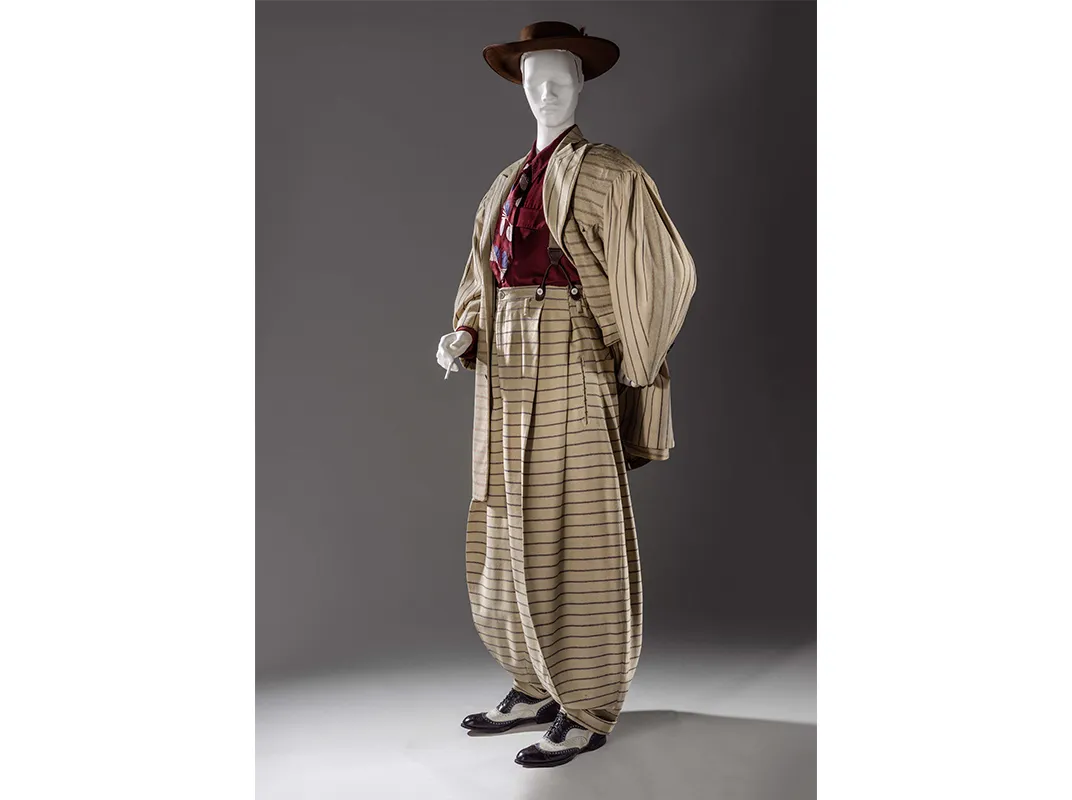
Additionally, the jazz scene popularized the colorful, baggy ‘zoot suit’ in the 30’s, which became very unpopular in the 40’s, as it was seen as unpatriotic.
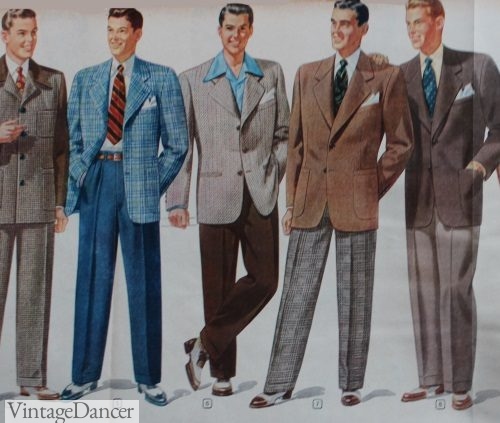
During war times suits had to be made with thin lapels, and were only single breasted.
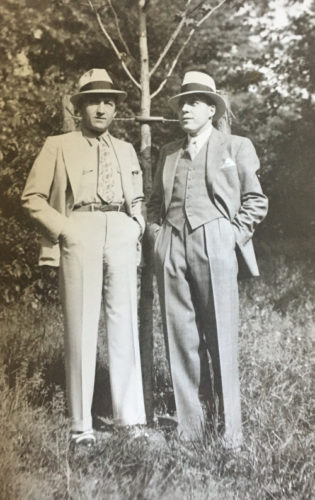
However, the end of war soon brought the return of bigger, double breasted jackets, with wider lapels.
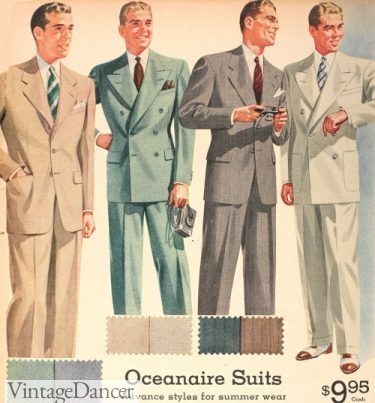
Soldiers returning from war started to embrace the new bold fashions, wearing new suits made from brighter colors and louder patterns. They also tended to choose jackets of contrasting colors to the rest of their outfit, making a statement.

Hats
During the earlier years of the 1940’s, hats were worn to symbolize a well styled man. These hats were often made from felt, and the most popular style among men was the fedora – which was often worn at an angle.
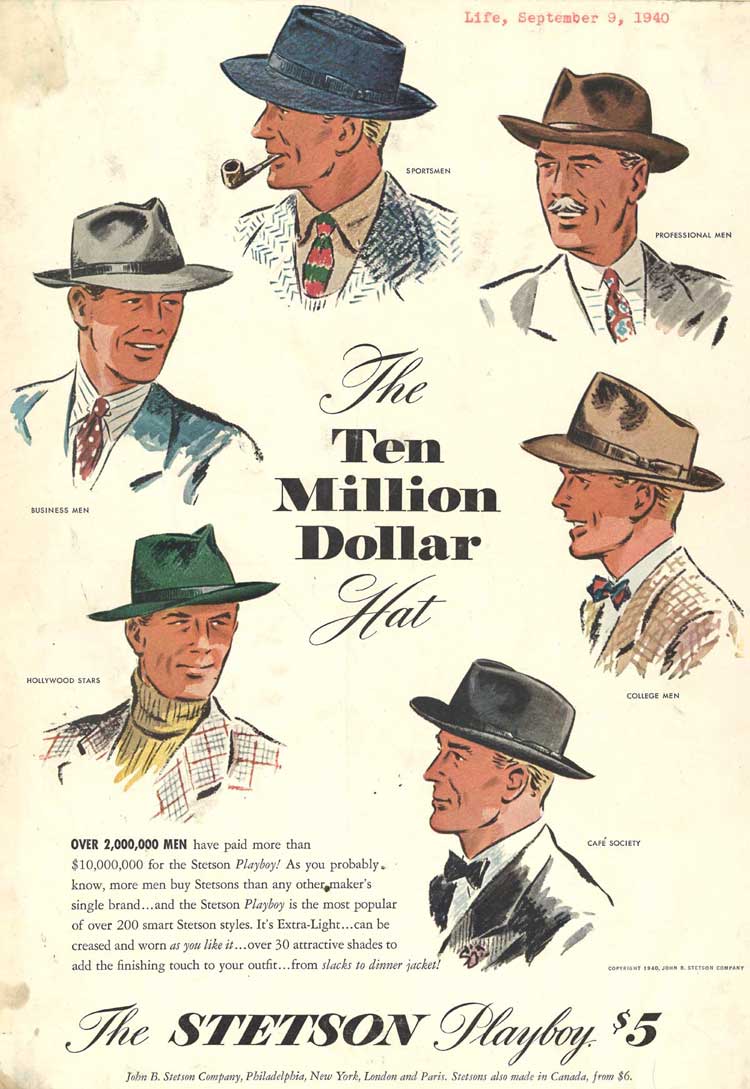
For more formal events, men would usually wear a homburg hat.

Additionally, in the summer, men often wore wide brimmed straw hats in a variety of shapes and colors.

For more casual, active leisure wear, men often opted for a flat cap.

However, toward the end of the decade hats became much less popular, especially among younger men.
Shoes
During the 40’s, men’s shoes and boots were made to be practical and durable during the tough times of war.

Shoes often came in the colors; black, brown white or two-tone.

Some of the most popular styles of this decade include Oxfords, Brogues, and slip on Loafers.
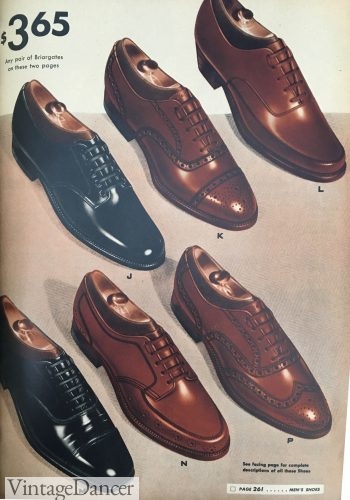
Work boots were often made from leather, with laces and hooks.

The most legendary shoe of the decade is the black and white, two-tone ‘gangster shoe’, along with the zoot suit shoe, and vintage dancing shoes.
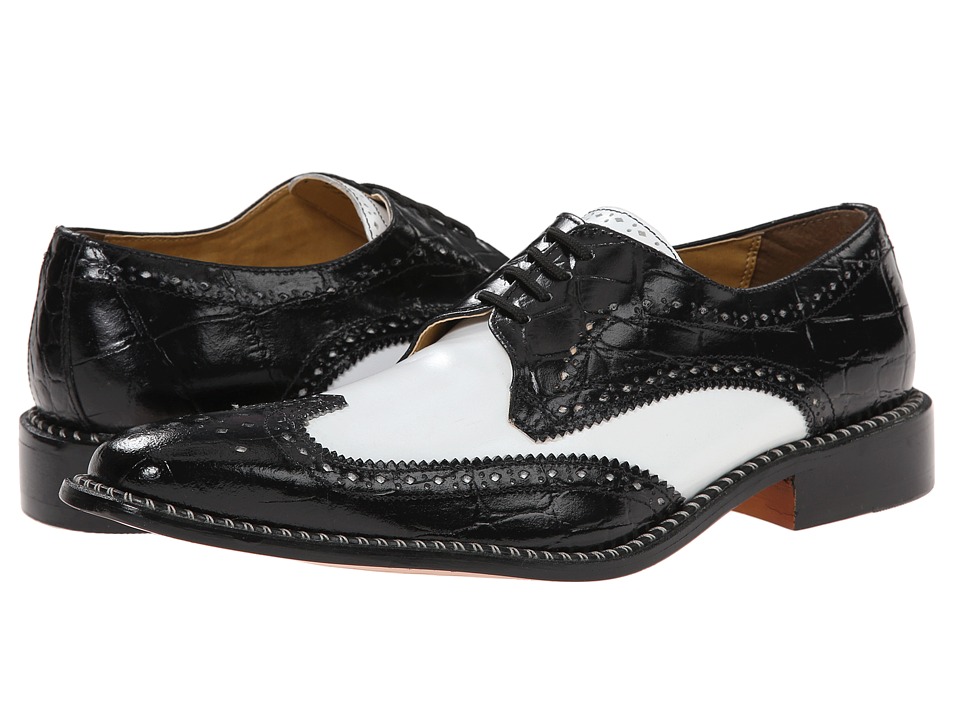
There were many different features in shoes of the 1940’s, compared to those of today. These include small holes in summer shoes – for breath-ability, and leather soles on dress shoes.
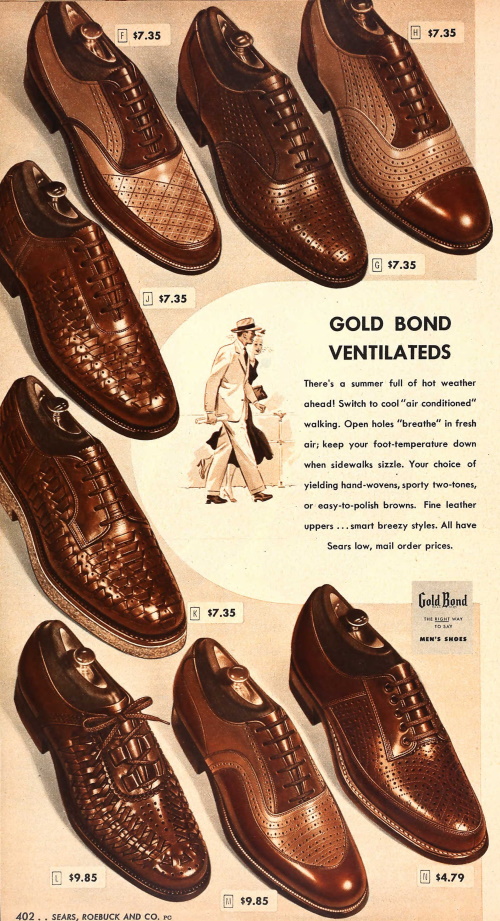
In this decade, men used their shoes as the final accessory for their outfit, upgrading the outfit from good to great.
Uniform
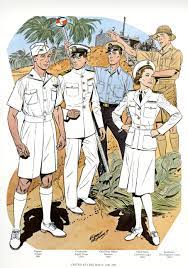
Military uniform was a huge part of most men’s lives, during the second world war, in the 1940’s. These Uniforms differed depending on rank, location and type of one’s service. However, they all followed the same basic, suit structure.
 Megan Hoff